Wood Carving?
A few months ago, while rummaging through my wood collection (isn’t owning a wood collection an amazing flex in 2026?), I came across the crude pencil outline of a spoon sketched onto a solid block of mahogany—a project I'd clearly left long enough for the dust to settle.
Quite literally.
Along with it emerged some carving tools, which had also managed to lose themselves beneath a pile of other things. With the wood and tools reunited, all that remained was someone to do the negotiating with my tendency to procrastinate.
A good dose of determination was required through the following self talk:
‘This block of wood is going to be made into a spoon and I don’t care how long it takes!’
Thus, I began whittling away, hoping that this hard lump of former tree might become something worthy of a place on my kitchen wall.
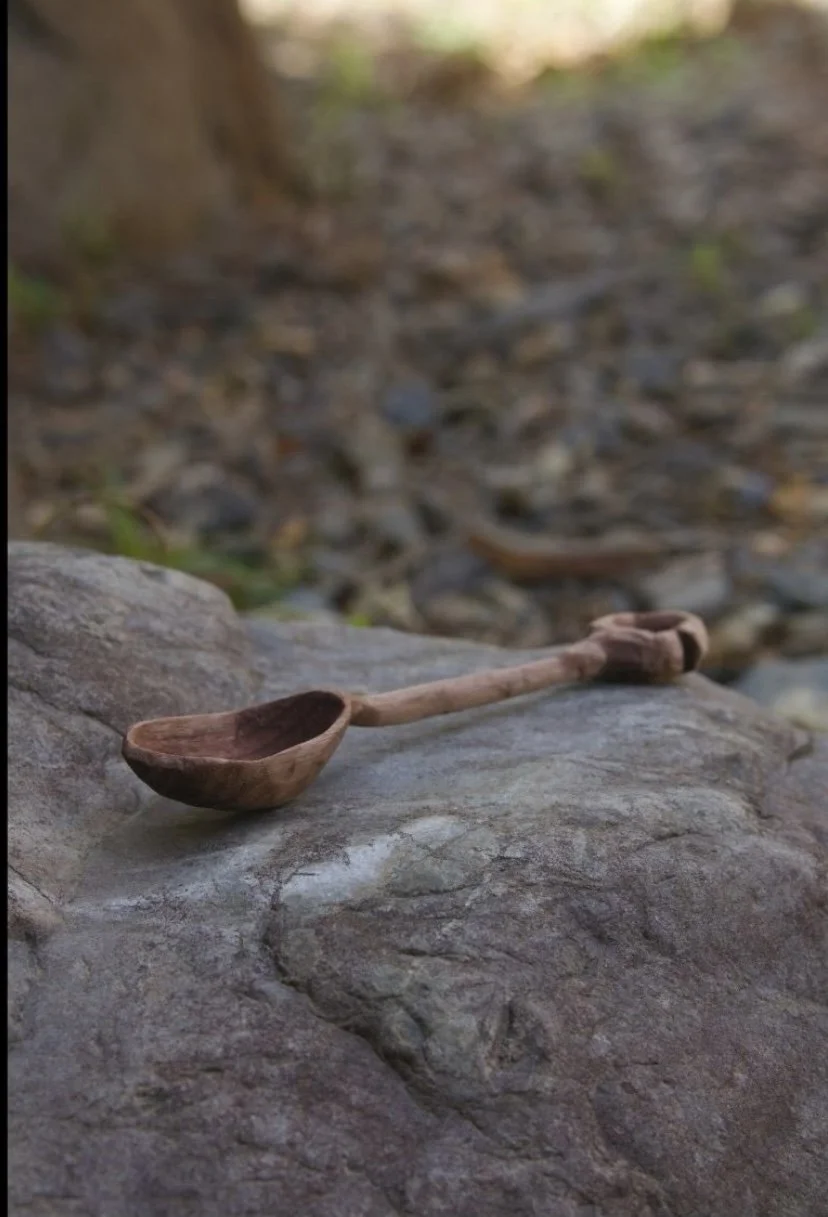
The end result
To my surprise, I actually followed through and what happened? A wooden spoon happened! Crude but usable, rough around the edges but distinctly characteristic. In some ways, a bit like myself (This is where you may laugh/agree).
During the process, I realized that wood carving was something I really wanted to take up again.
I say again because I did spend some time in my father’s workshop growing up. Well, we all did, me and my brothers. Wood working was all around us as children.
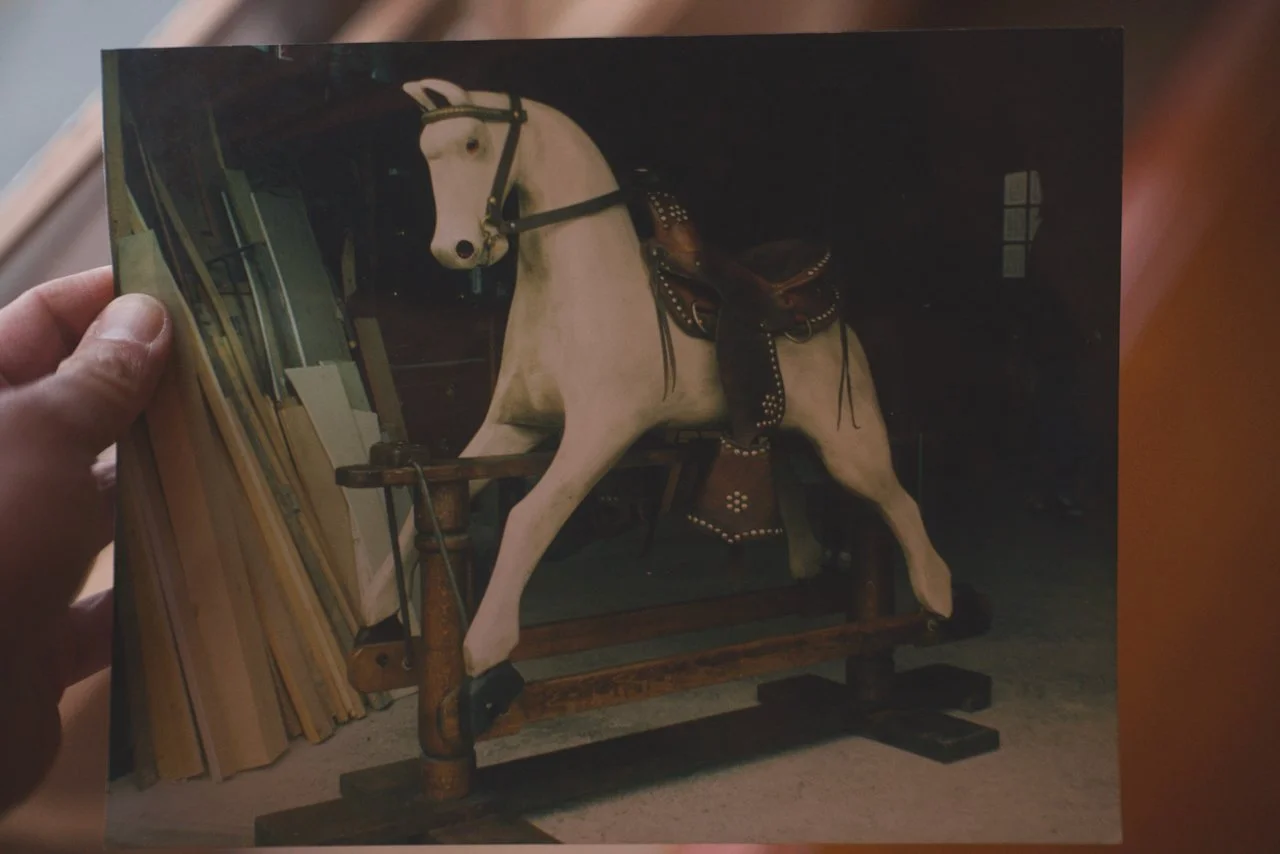
One of the rocking horses my father made. A real horse saddle and real horse hair were used for the tail.
Anyway, that’s enough prelude for now. On a recent trip to the Japanese post town of Kumagawa Juku(more on that in another article) I happened to meet a master woodcarver whom I had been meaning to reach out to for a while.
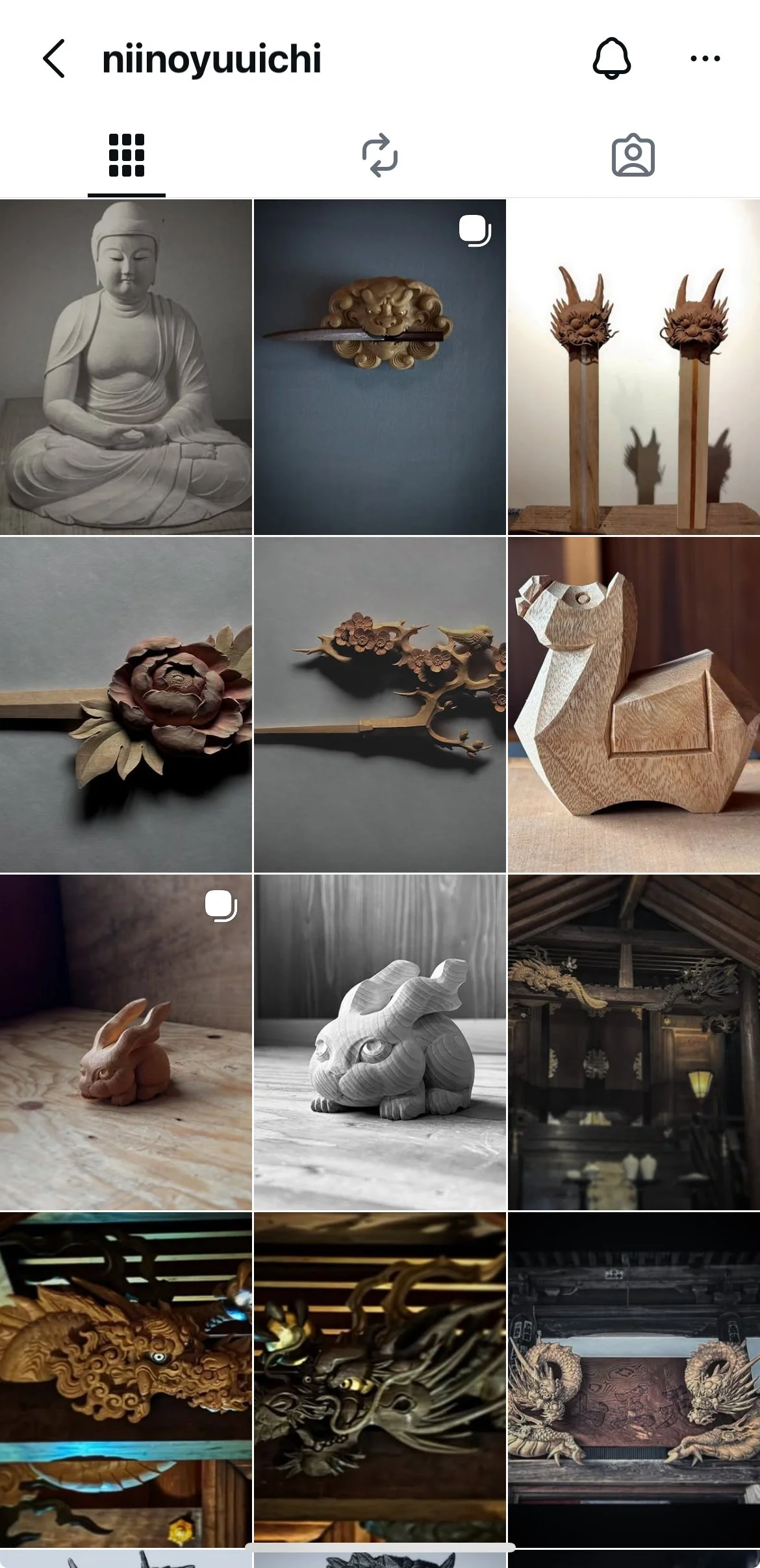
He told me that he was running a wood workshop twice a month and if I would like to attend.
I immediately signed up without even asking the dates, times or even the cost. Details were not so important to me at this point as I felt the situation too serendipitous to ignore. And thus, I found myself sitting in a wood workshop yesterday morning faced with a new challenge.
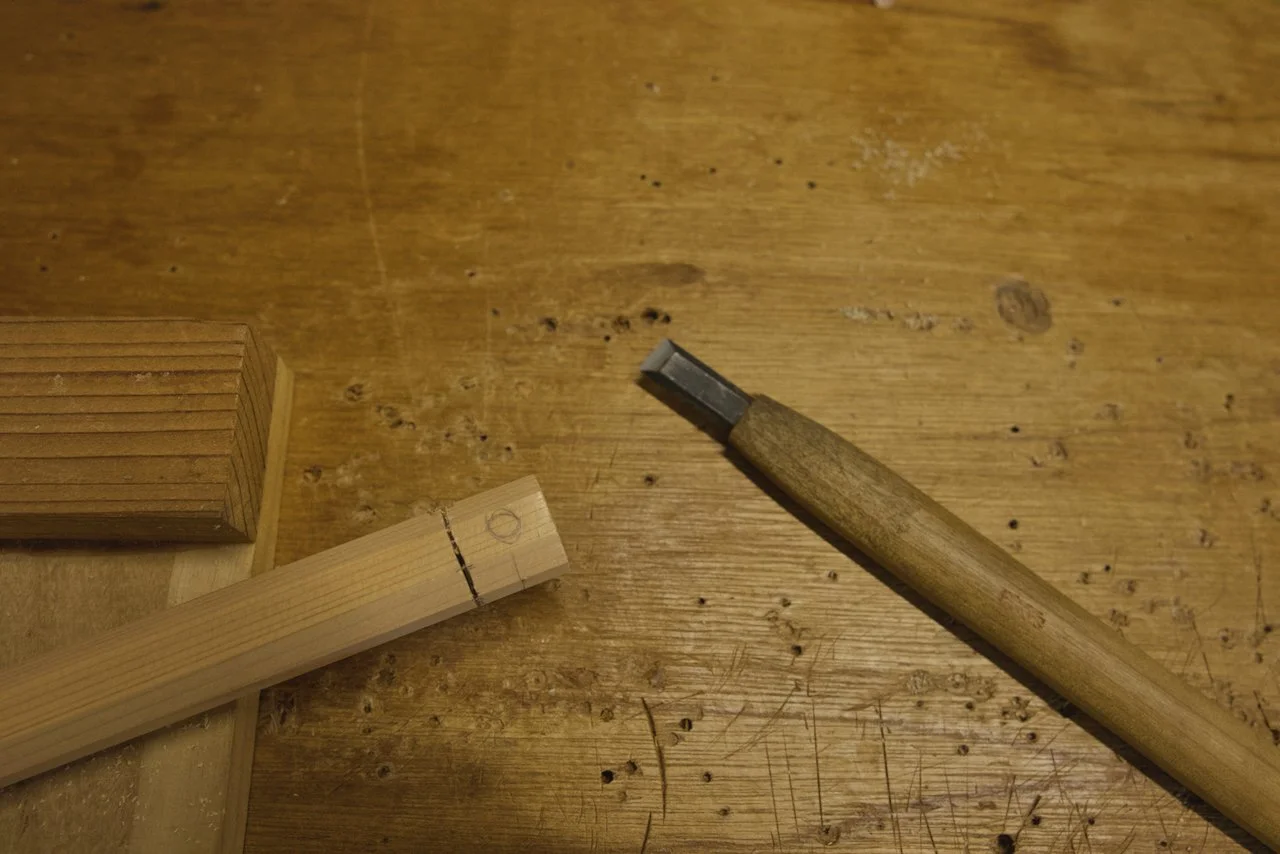
Humble Beginnings
In the first class, budding wood carvers must learn to carve out a sphere from a stick of wood. For some, this may seem a rather simplistic en-devour. However, you must remember that Rome wasn’t carved in a day.
In fact I think it took something like 1000 years.
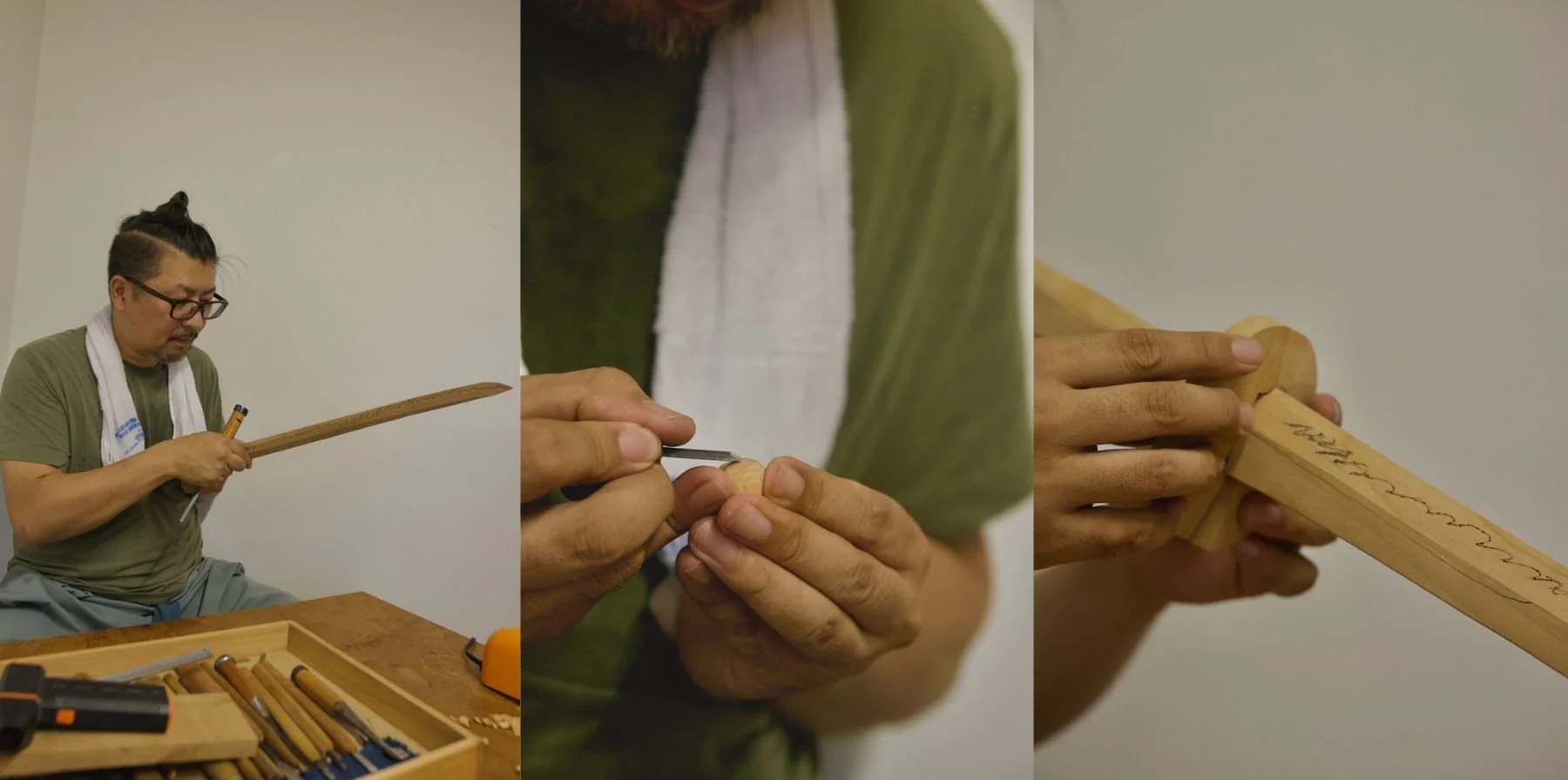
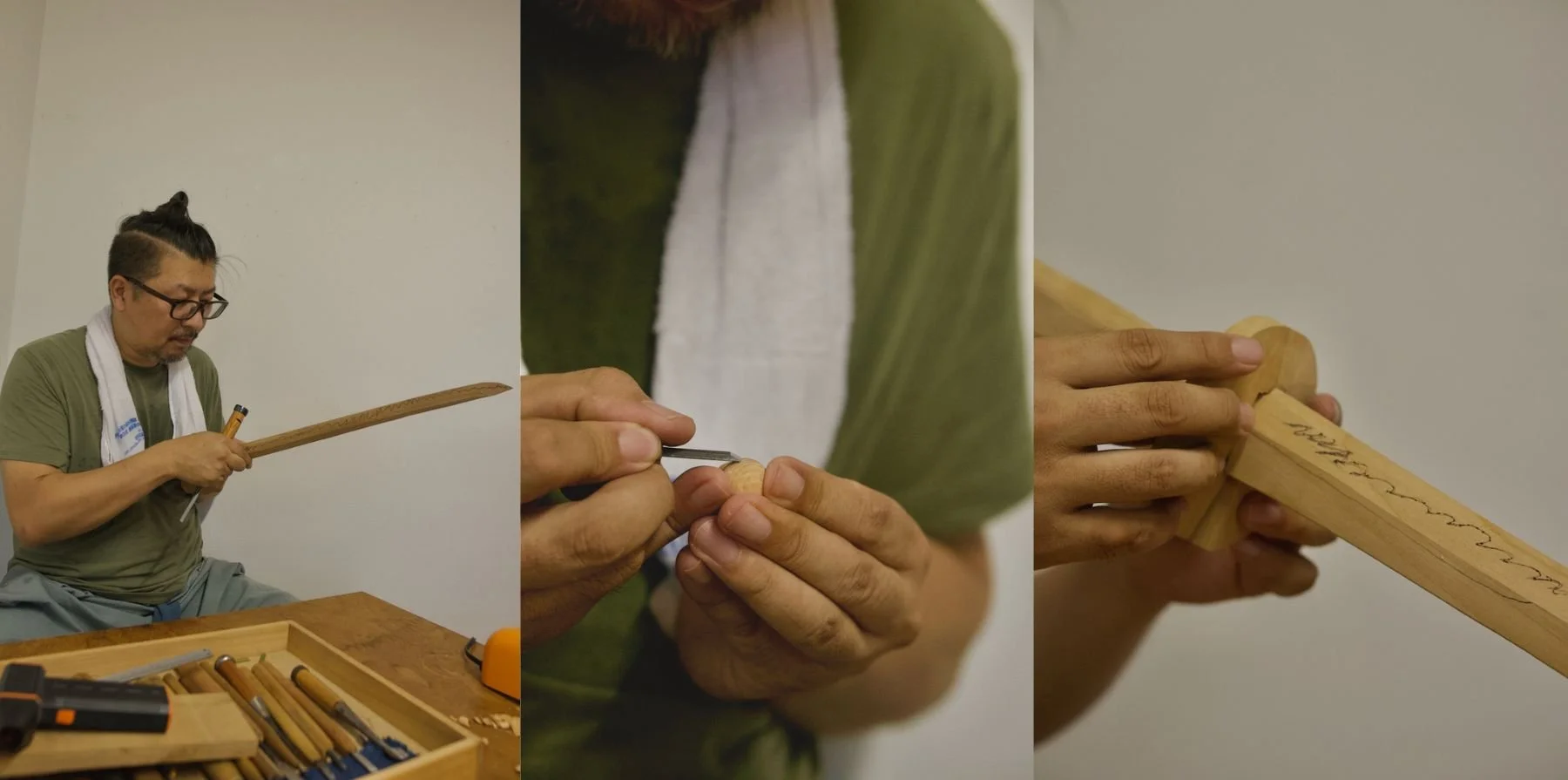
Above left/right: Nino-san makes some final touches to a wooden katana
Center: Providing some instructions of how to finalize my wooden sphere
If historical references aren’t your cup of matcha, reflect on this:
You don’t run a marathon without tying your shoelaces first.
It won’t end very well.
About the Experience
It was both informative and relaxing. You could even say somewhat meditative. Nino-san and his apprentice overlooked while offering the occasional piece of advice but didn’t hover over us pointing out every mistake.
This style vibes with me greatly as I actually enjoy messing up sometimes and seeing if I can get myself out of it.
Often I can’t but it is fun nonetheless.
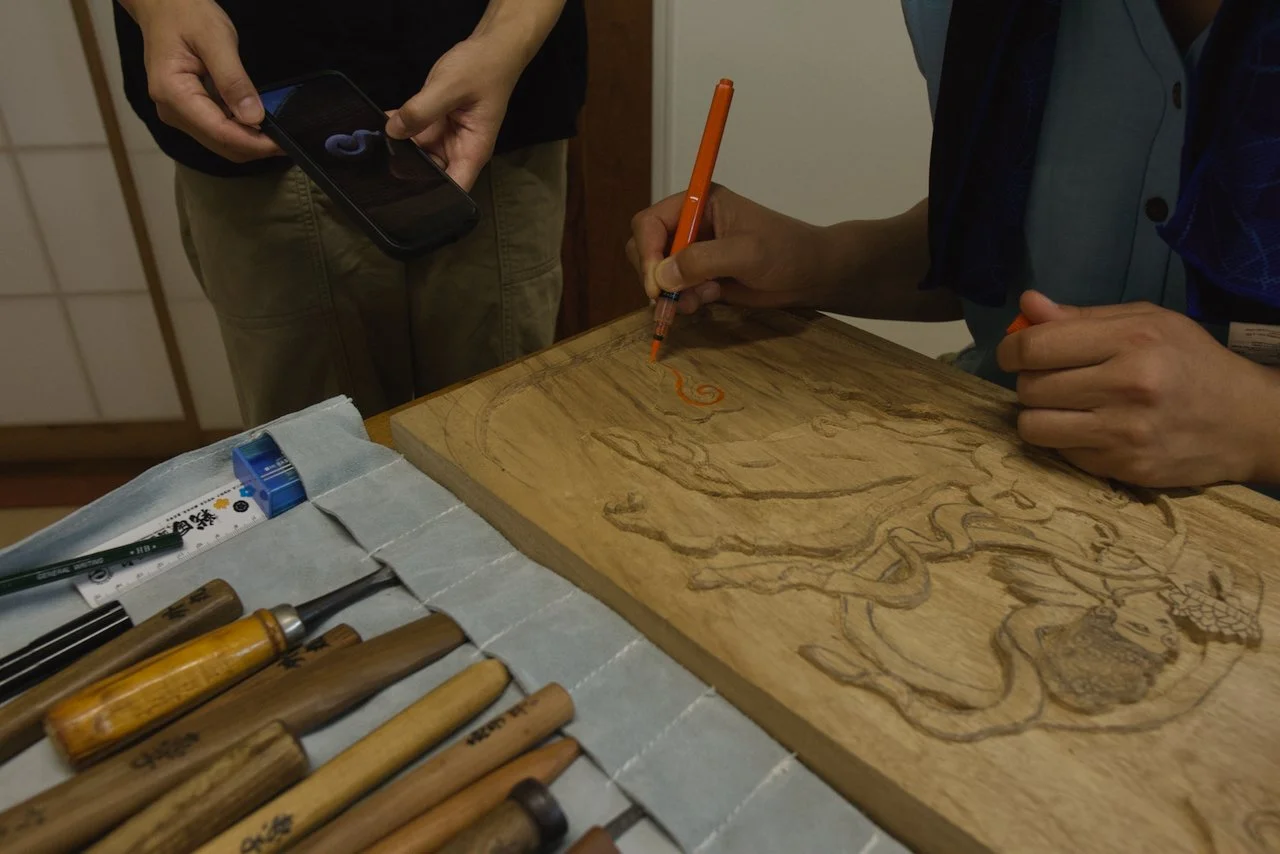
Keiko-san’s rather epic project
During the initial introductory five minutes, and much to my surprise, the other participant of the workshop took out a large slab of wood of complex design. She would later inform me that it depicts the Buddhist image of Tennyo (天女).
A female goddess found throughout ancient Japanese art, textiles, architecture, theater, and even in festivals. I was very much inspired and asked if I could take a picture.
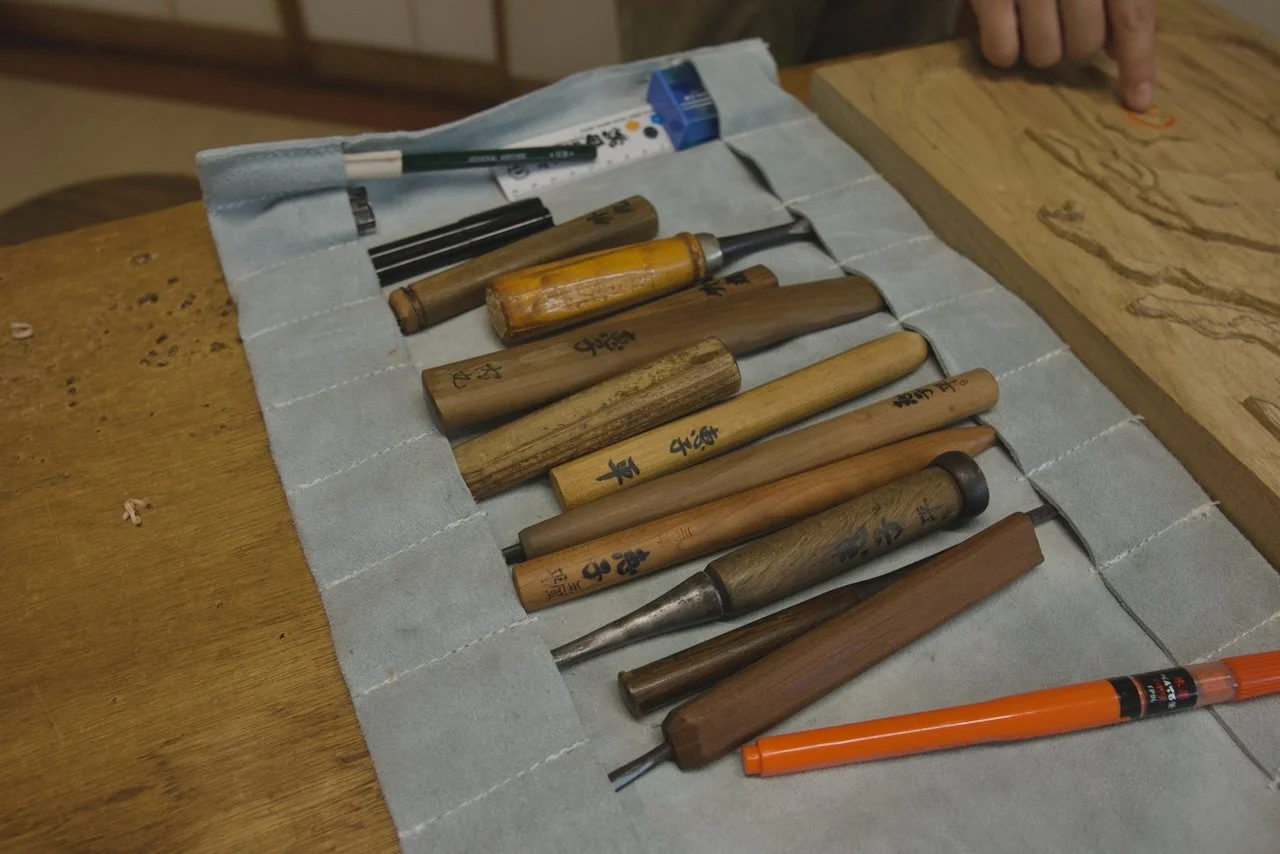
Keiko’s Chisels - She means business.
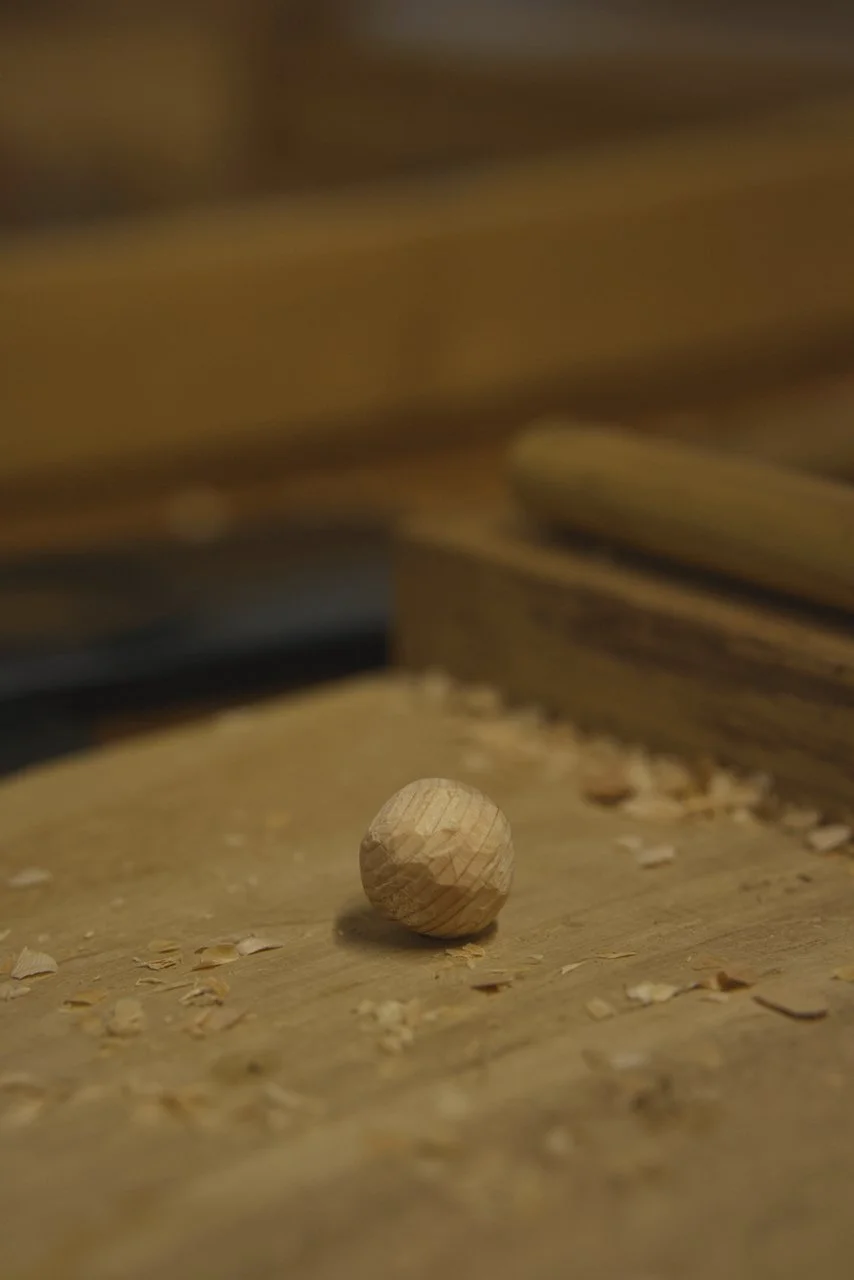
Success! A kind of sphere.
While I could go on and on about the experience, I have a hungry cat to attend to. In any case, whether my wooden ball turned out perfect or not is besides the point. What is important is that I seem to have
set the ball rolling...
(you don’t need to laugh here).
Japanese Plum Harvesting
Every June, the quiet hills surrounding Wakasa in Fukui Prefecture come alive with the annual ume harvest. Beneath the early summer sun, generations of farmers gather fruit from orchards that have shaped both the landscape and the identity of the region for centuries.
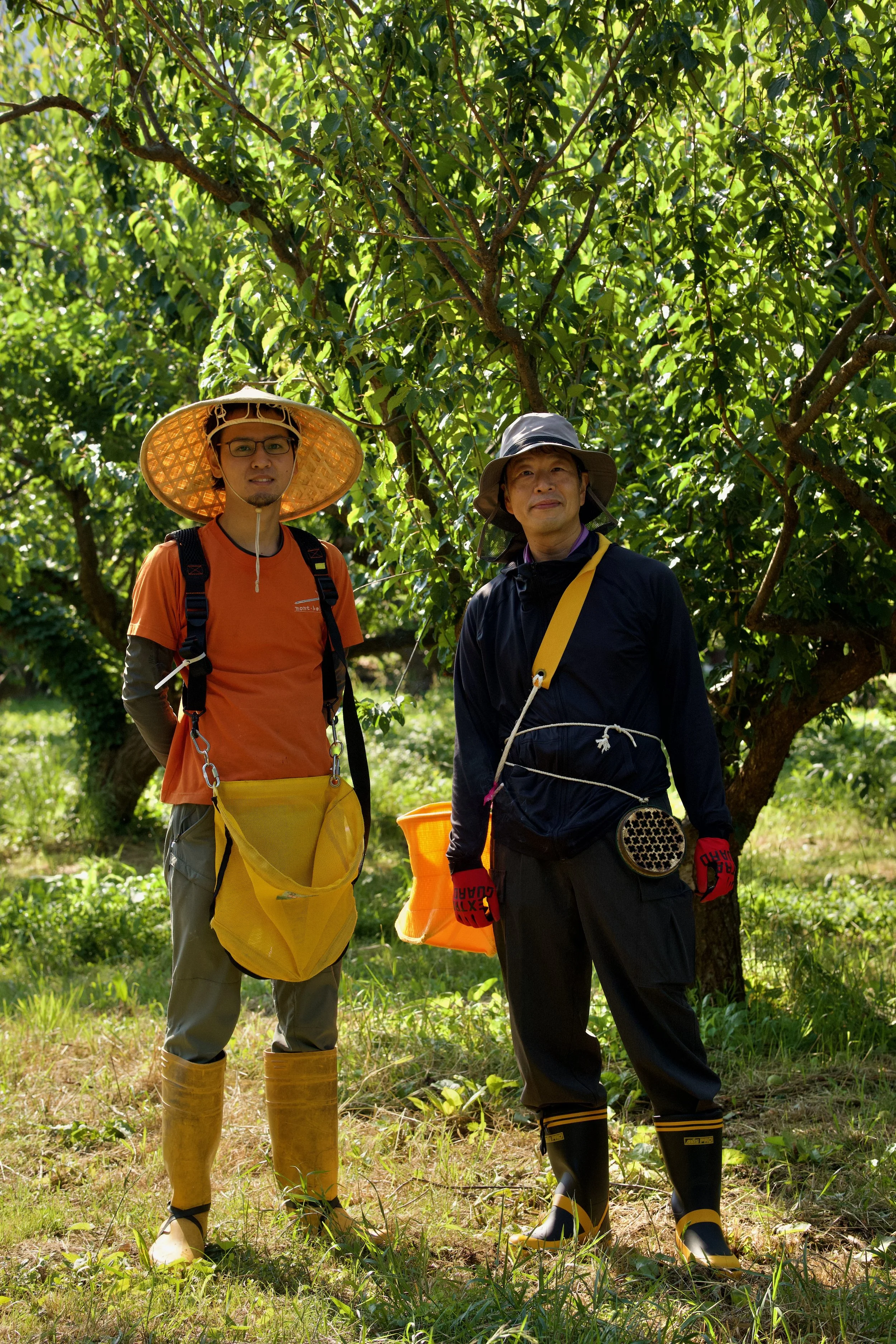
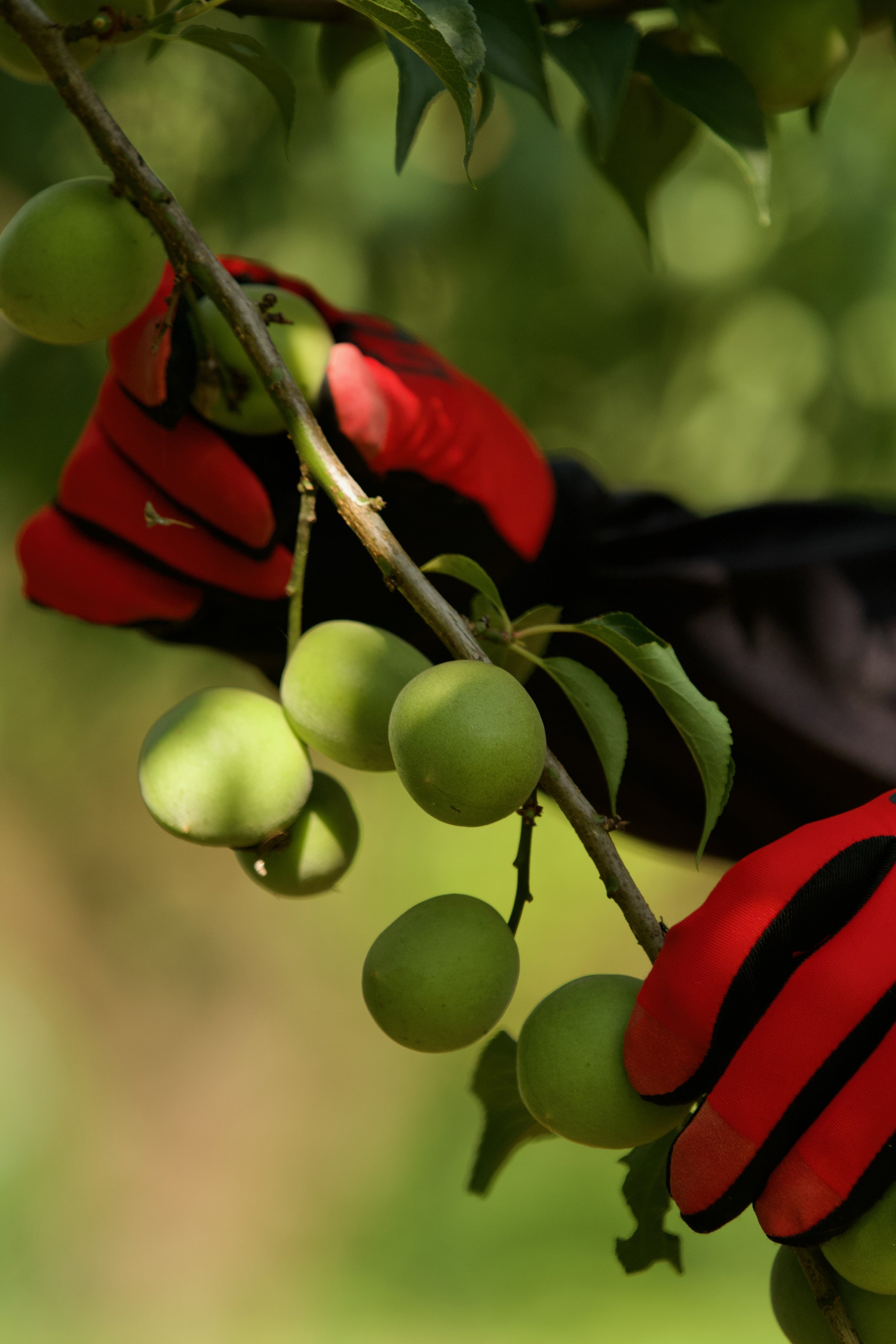
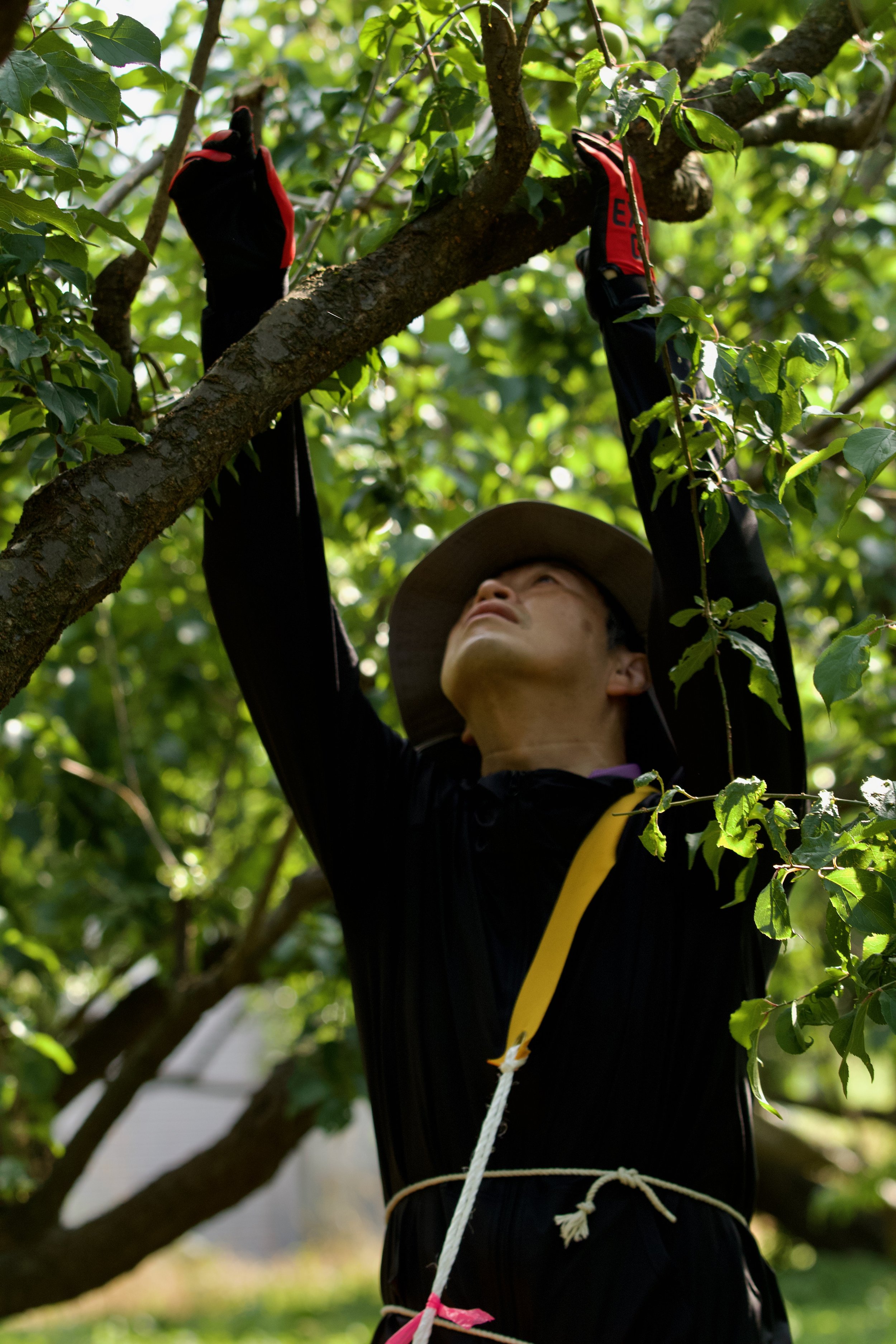
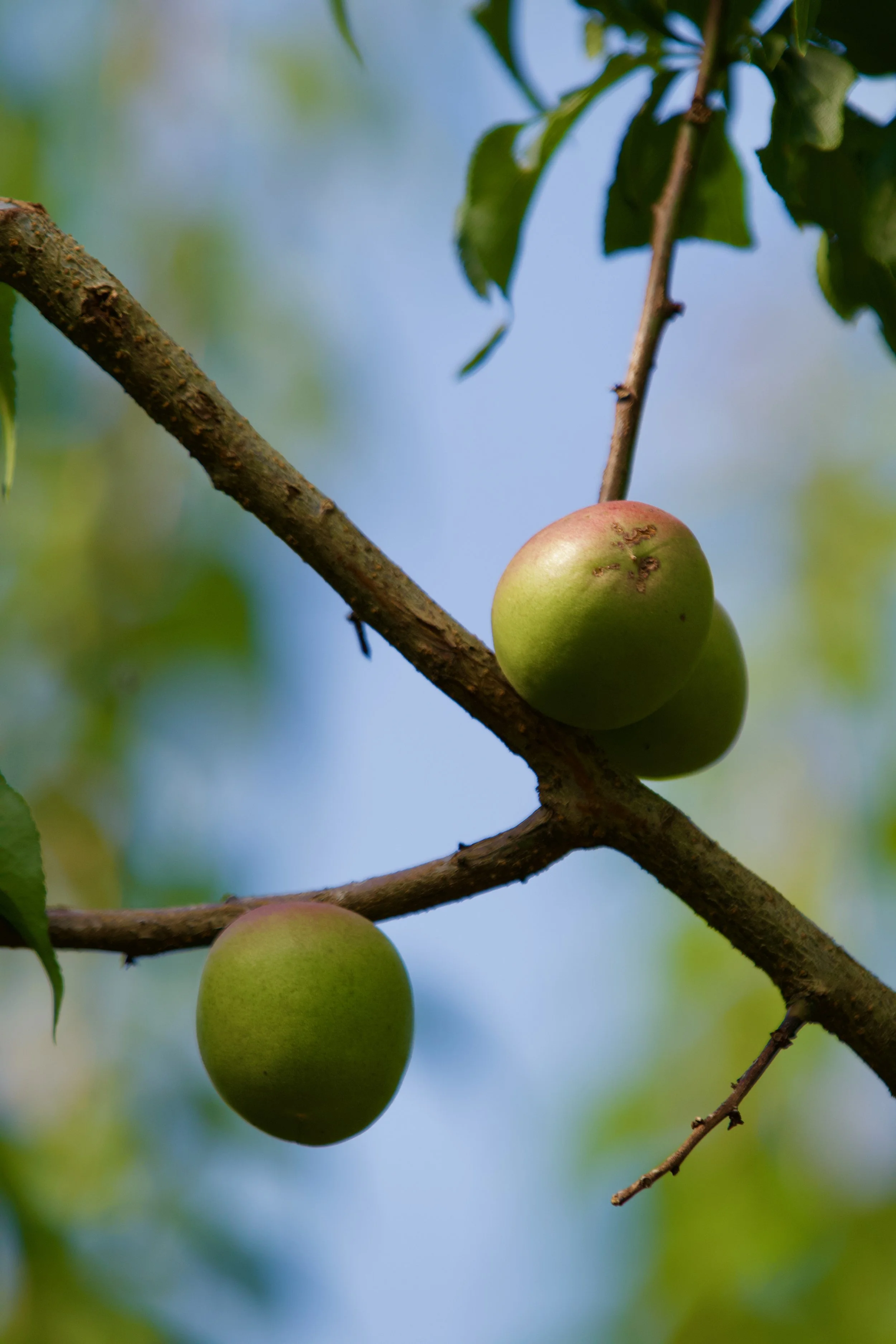
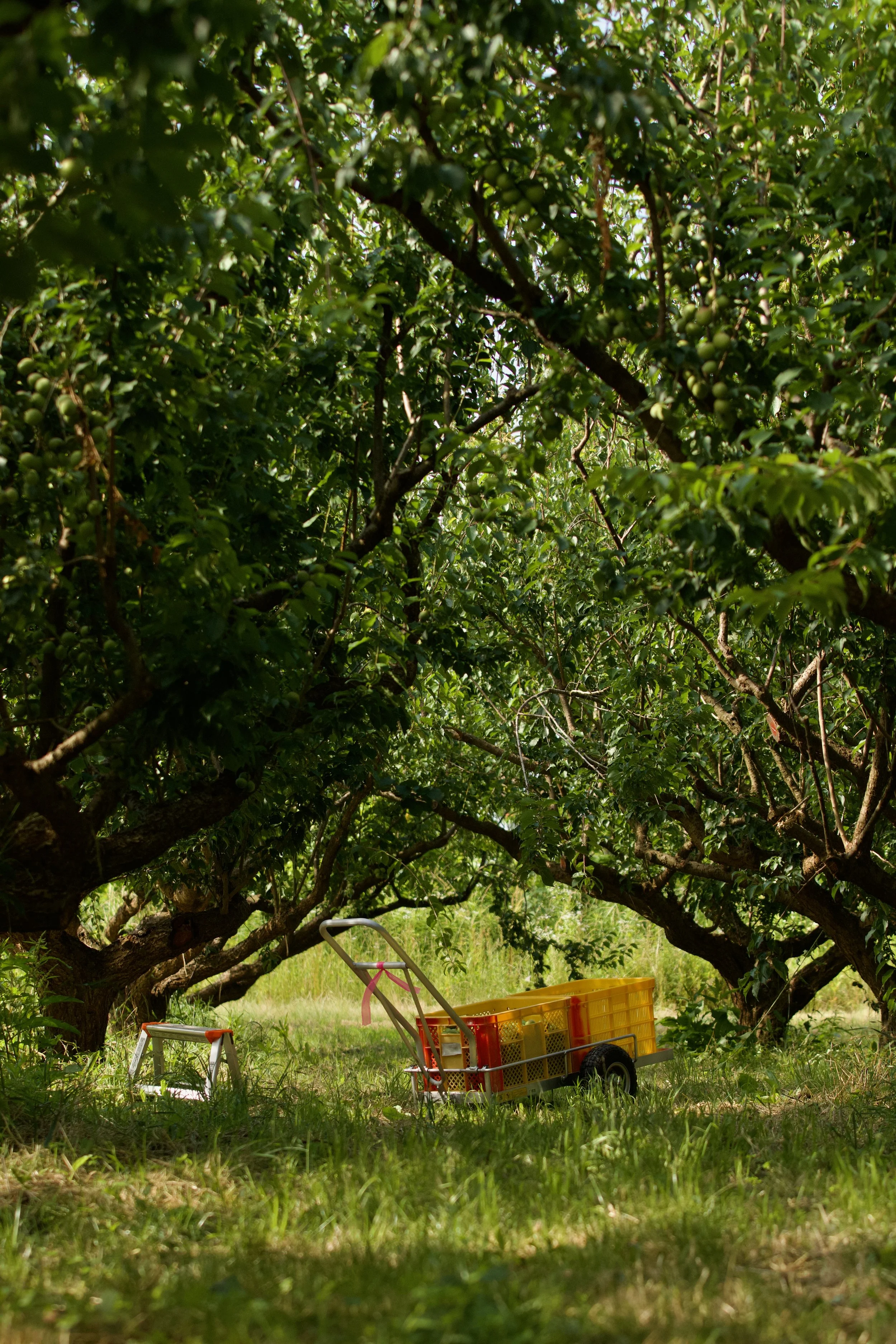
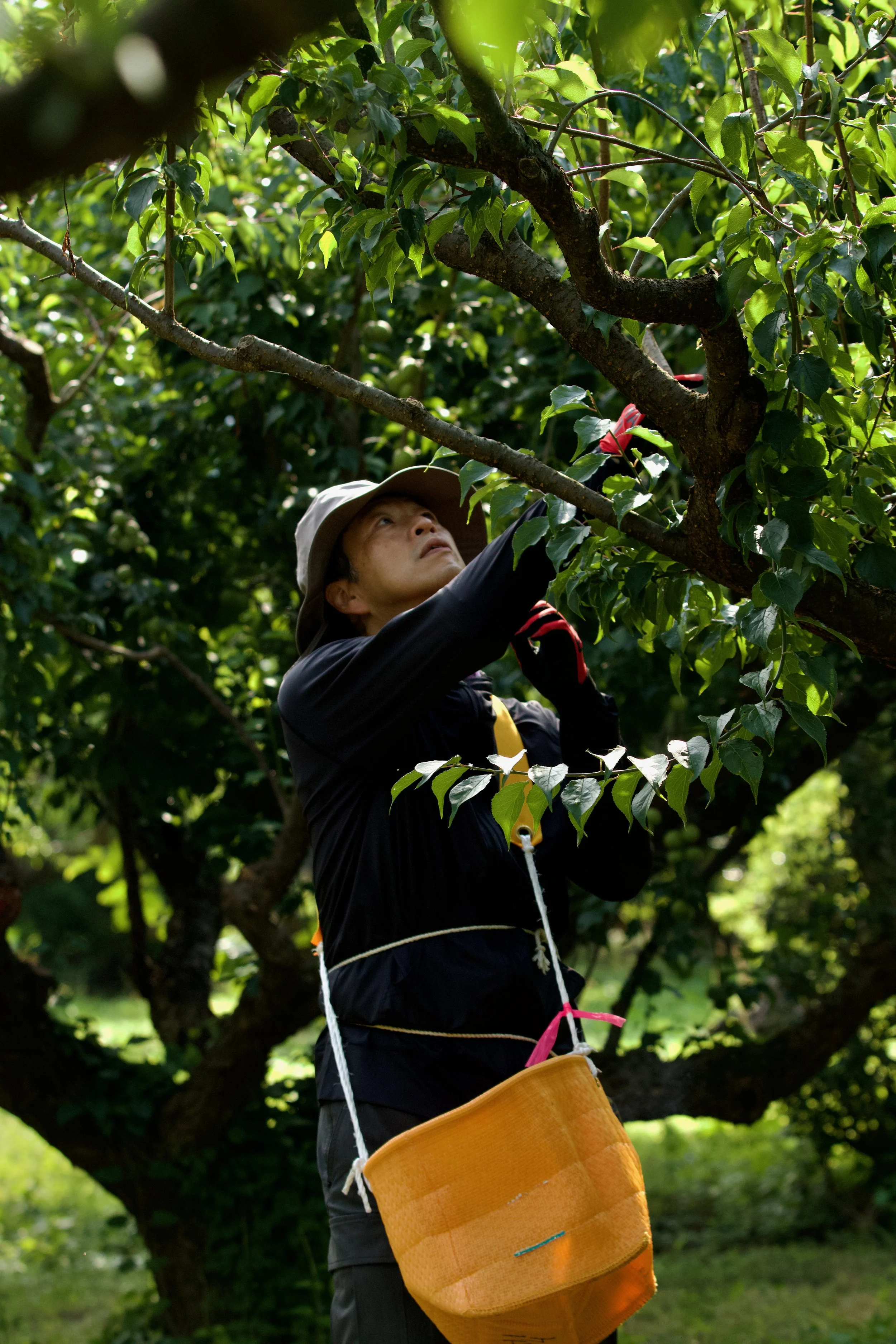
Wakasa is the birthplace of Fukui Ume (福井梅), one of Japan's most distinctive regional plum varieties. Nestled between the Mikata Five Lakes and the Sea of Japan, the region possesses a rare combination of mild winters, abundant rainfall, and fertile soils that have long provided ideal conditions for cultivation. Yet the significance of Fukui Ume extends beyond geography alone.
For nearly two hundred years, families in Wakasa have tended these orchards, passing down knowledge, techniques, and traditions from one generation to the next. The trees themselves seem to embody a quiet continuity, standing as living witnesses to the passage of time. Long before modern roads, smartphones, or even electricity reached the area, people were harvesting ume from these same hillsides.
Perhaps that is what strikes me most about the harvest. It is not merely the gathering of fruit, but the continuation of a relationship—between people and place, past and present. Each basket of ume represents countless acts of care: winters endured, branches pruned, blossoms protected, seasons patiently observed.
In a world increasingly defined by speed and constant change, the Fukui Ume harvest offers a different perspective. It reminds us that some of the most meaningful things in life cannot be rushed. They are cultivated slowly, over years and generations.
And so, every June, the harvest becomes more than an agricultural tradition. It becomes a quiet affirmation that what is nurtured with patience, dedication, and care can continue to bear fruit long after those who first planted the seeds are gone.
When Japan Opens the Sea
Historically, Japan’s relationship with the sea has always been one of both gratitude and caution. The ocean provides food, livelihood, and a connection to other lands — yet its power is both immense and unpredictable. Fishermen in ancient times relied on rituals to appease the deities of the sea (umi no kamisama), seeking calm waters and plentiful catches.
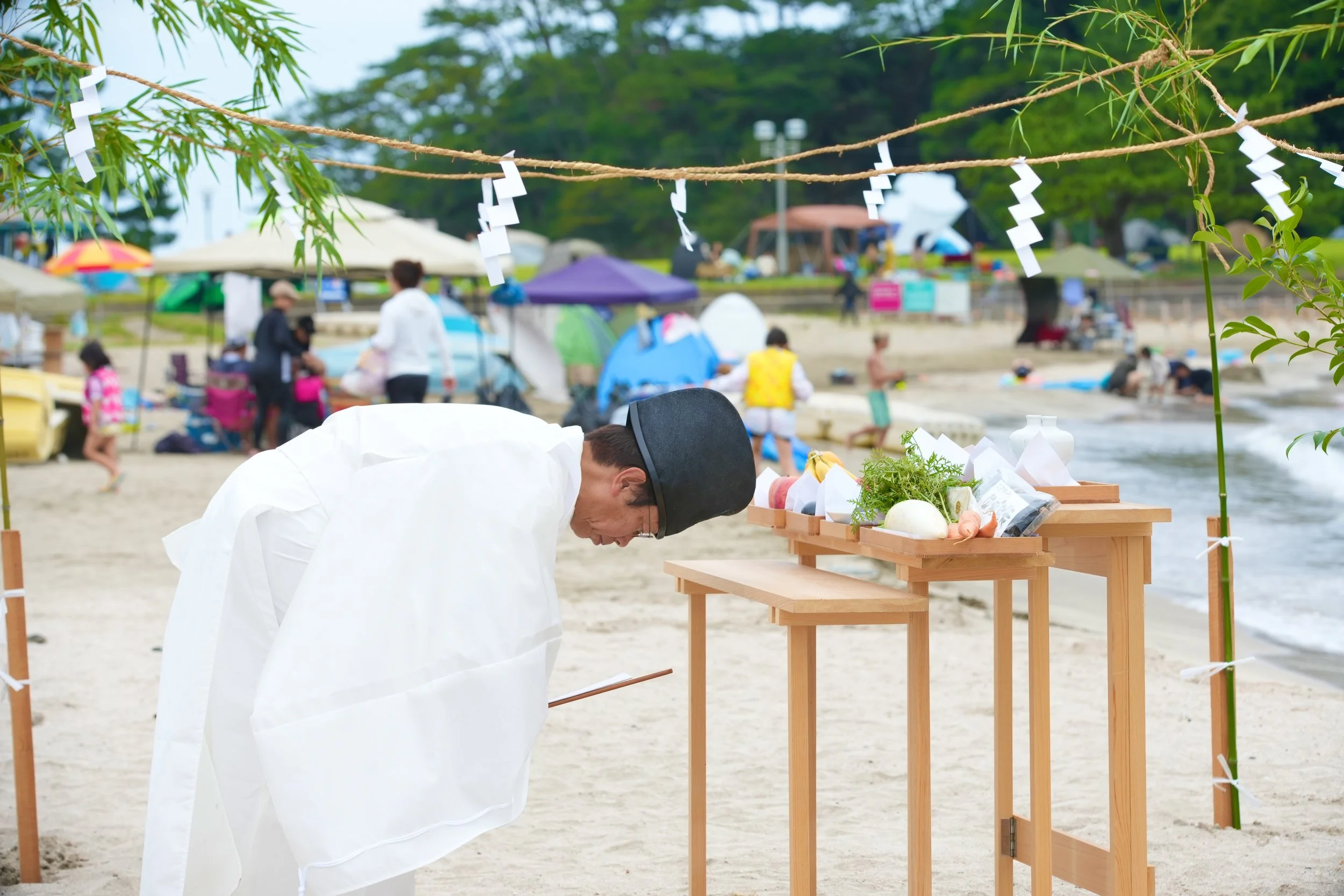
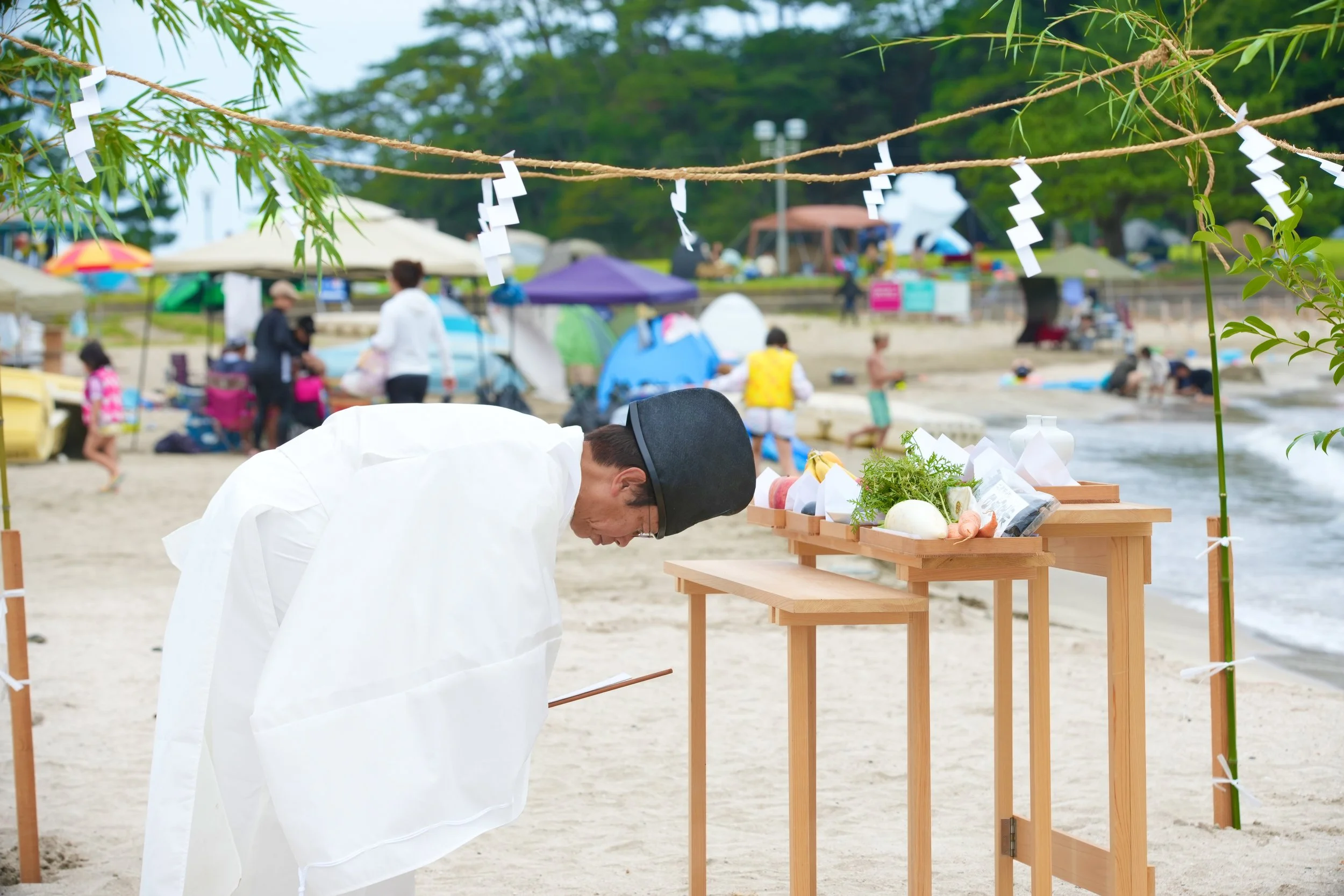
The head priest of a local shrine conducts the opening of the ocean ceremony, known as umi-biraki in Japanese.
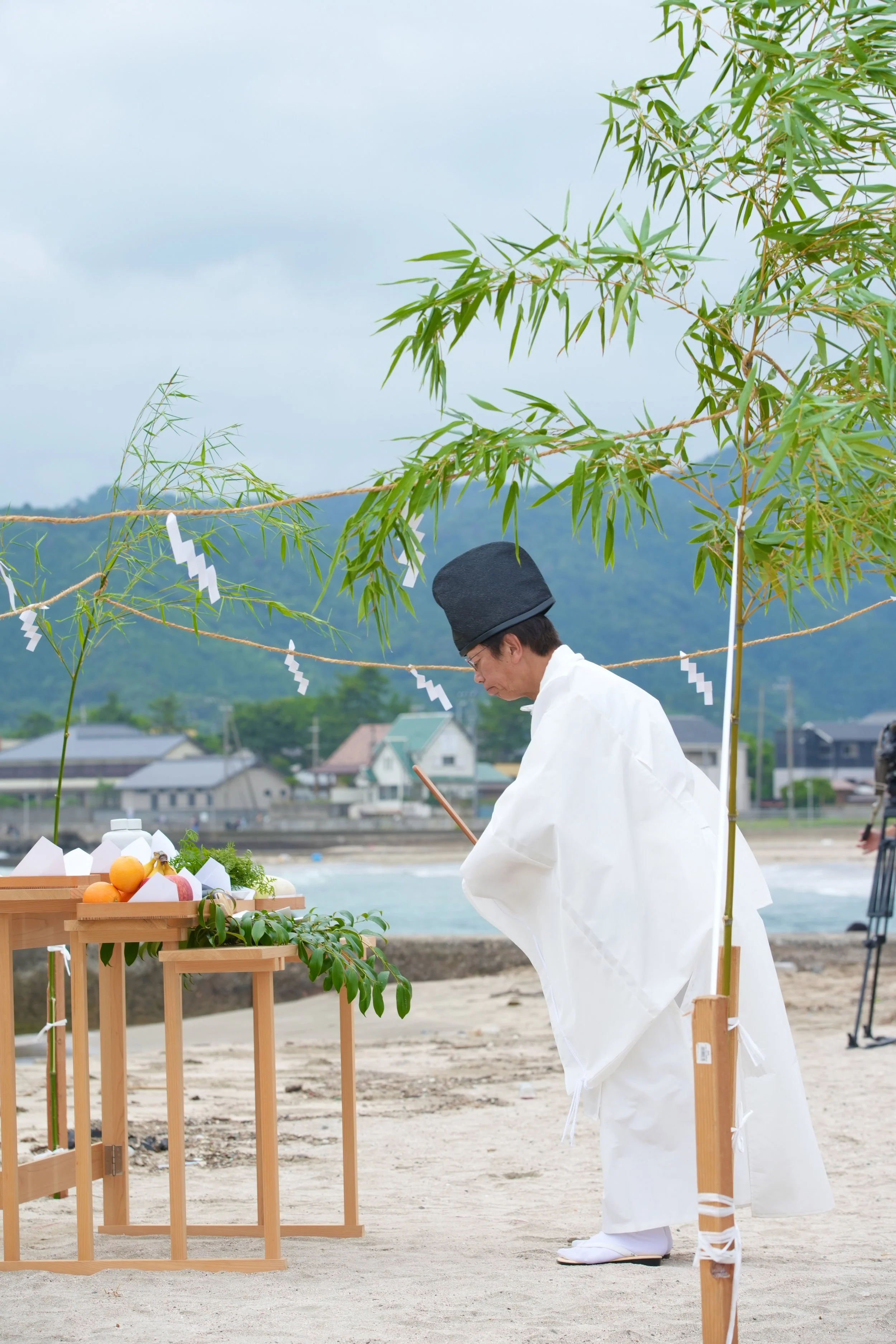
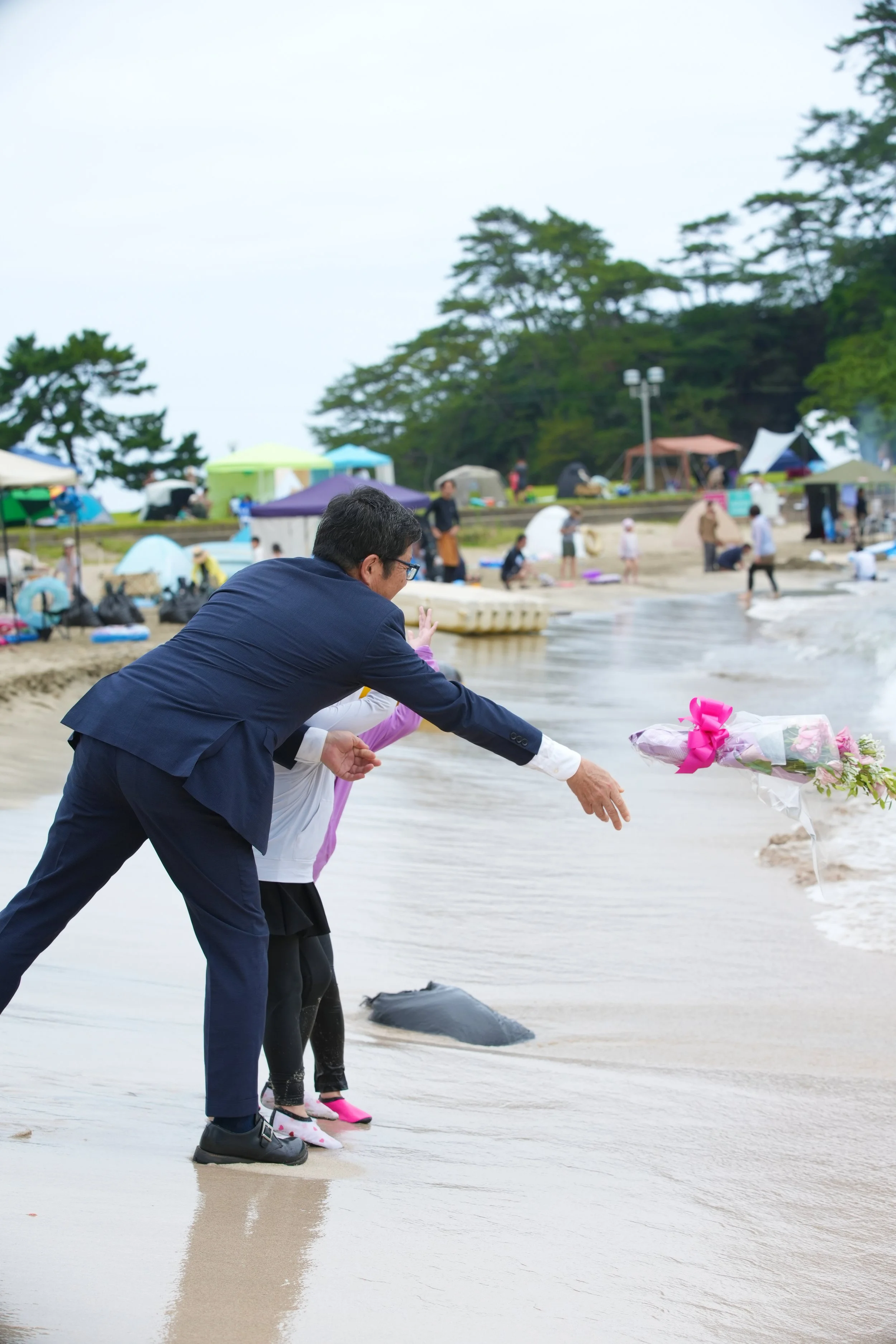
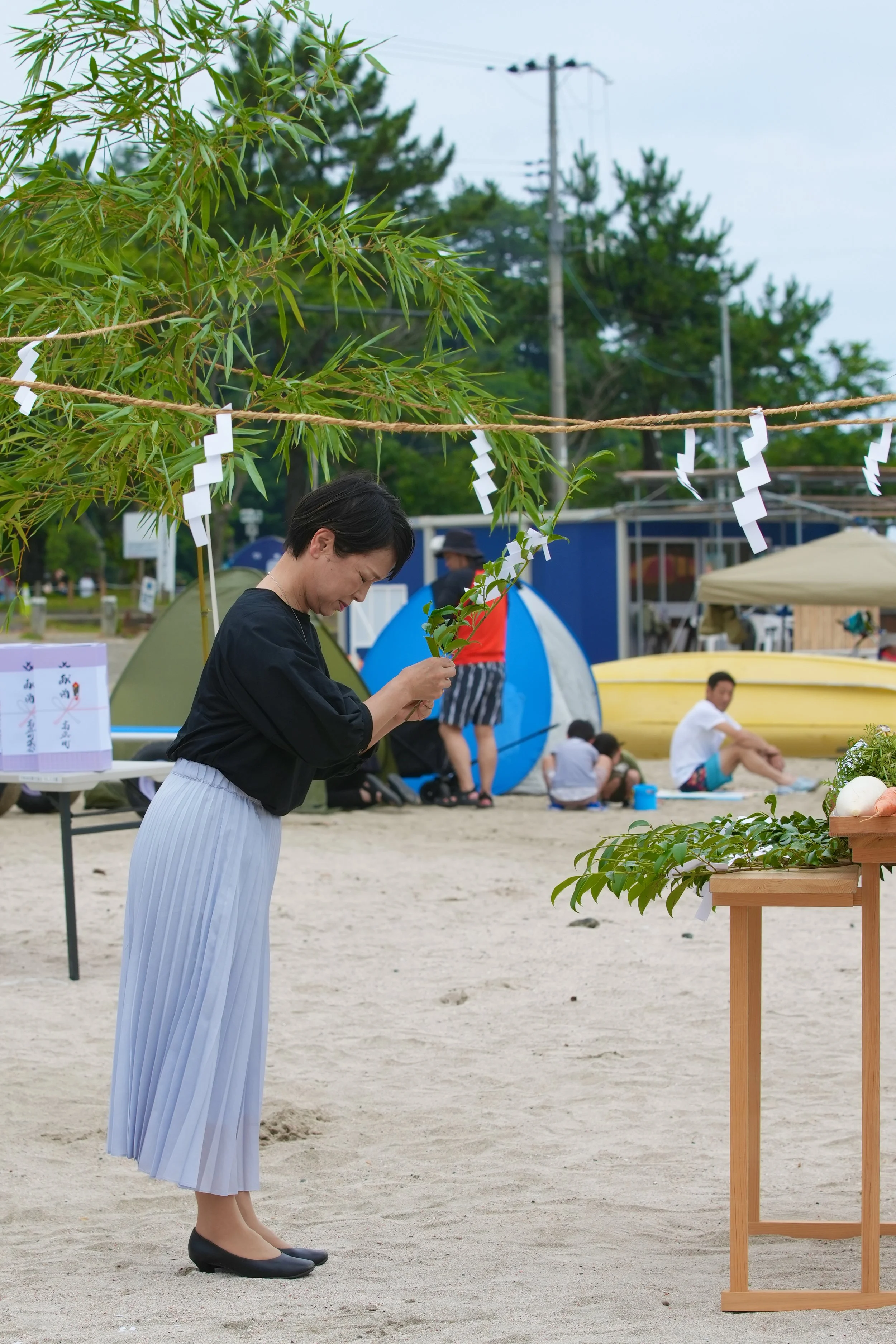

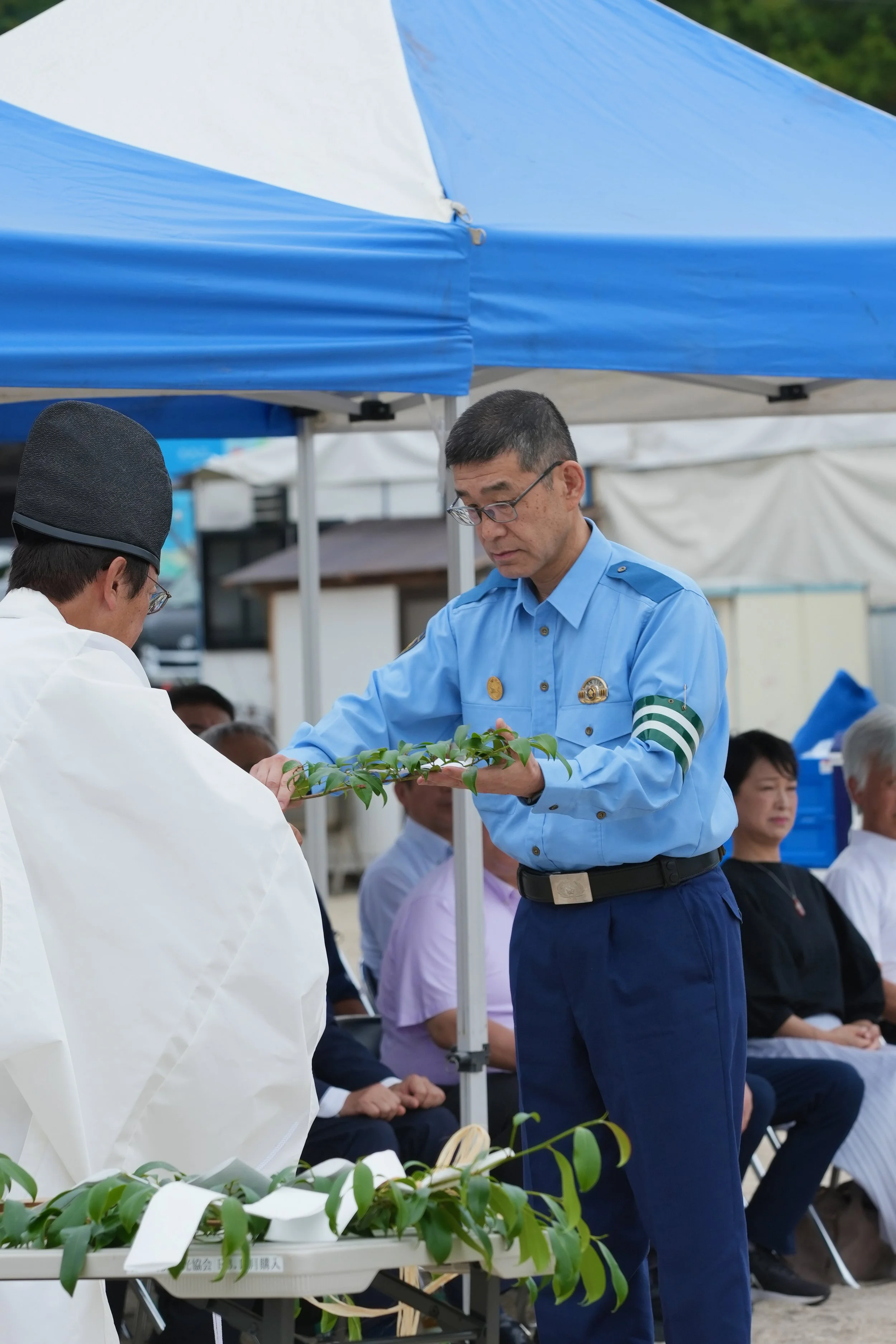
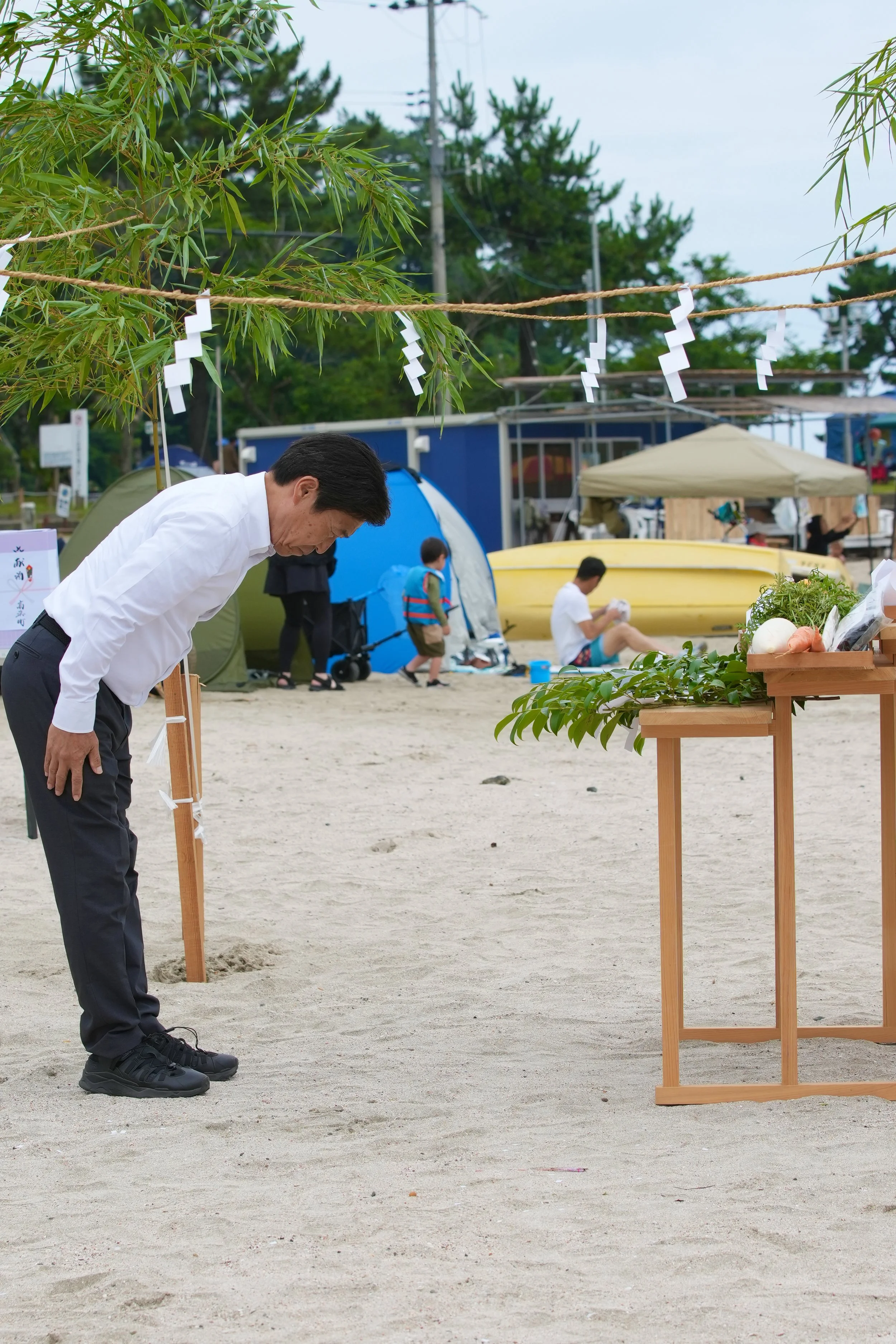
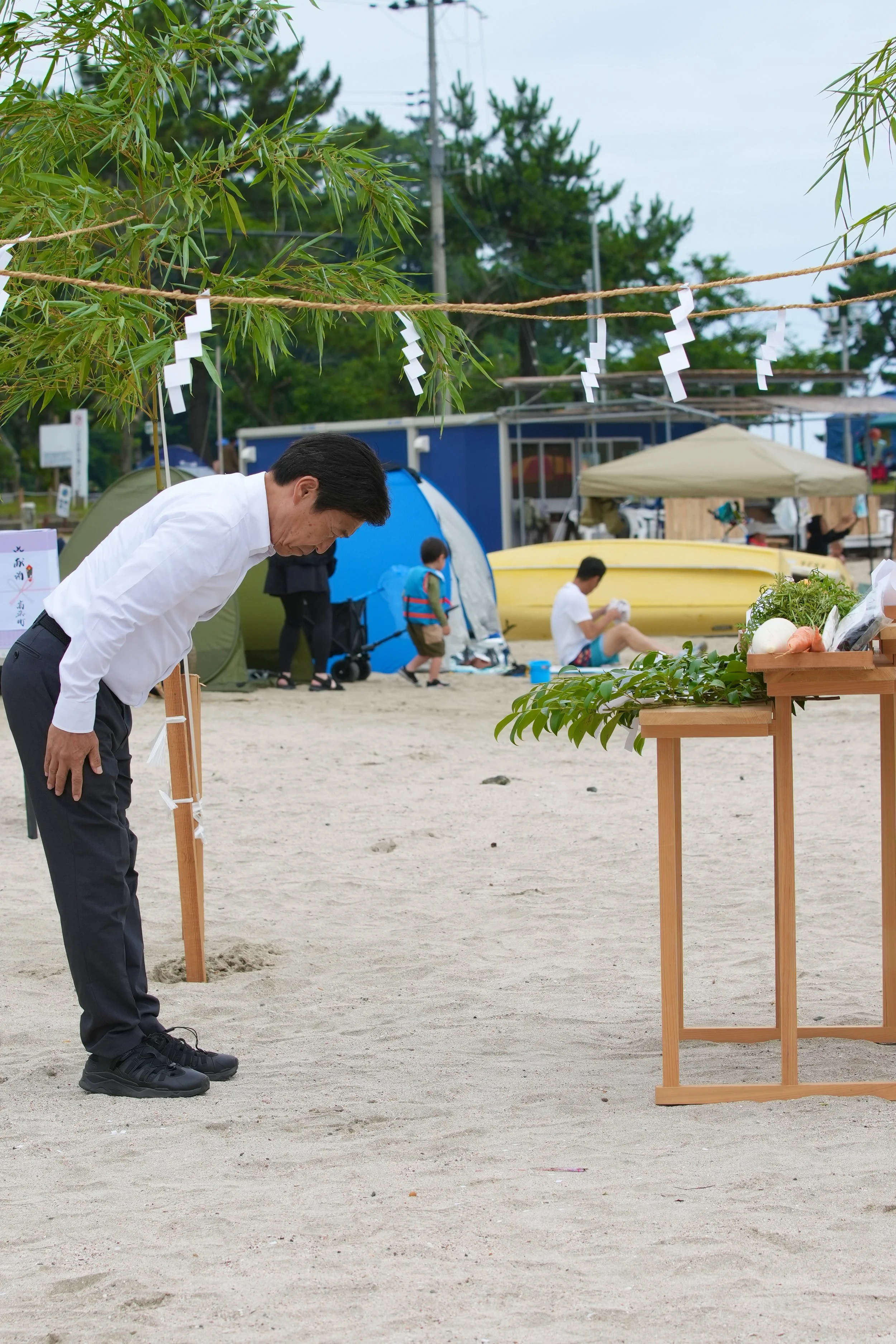
Historically, Japan’s relationship with the sea has always been one of both gratitude and caution. The ocean provides food, livelihood, and a connection to other lands — yet its power is both immense and unpredictable. Fishermen in ancient times relied on rituals to appease the deities of the sea (umi no kamisama), seeking calm waters and plentiful catches.
古くから、日本人にとって海は、恵みをもたらす存在であると同時に、常に畏れと慎重さを必要とする相手でもありました。豊かな食や暮らしの糧を与えてくれる海は、遠い土地と人々をつなぐ道でもありますが、その力は計り知れず、時に人の想像を超えて荒れ狂います。太古の昔、漁師たちは海の神様(海の神)を鎮め、穏やかな海と豊漁を祈るために、さまざまな祈りや儀式を欠かしませんでした。


The earliest forms of the opening of the beach umi-biraki ceremony were held to purify the shoreline, offer thanks, and pray for protection from storms, strong currents, and other dangers. Communities would gather on the sand while a Shinto priest conducted a ritual purification (お祓い, oharai), making offerings of sake, rice, salt, and sometimes fish, to honor the spirits that dwell in the waves.
海開きの起源とされる最初の形は、海岸を清め、海の恵みへの感謝を捧げるとともに、嵐や潮の流れなどの災いから身を守ってもらうことを願う儀式でした。地域の人々は砂浜に集い、神主が祝詞をあげてお祓いを行い、波間に宿る神々に向けて酒や米、塩、時には魚を供えました。こうして人々は、海とともに生きるための祈りを重ねてきたのです。
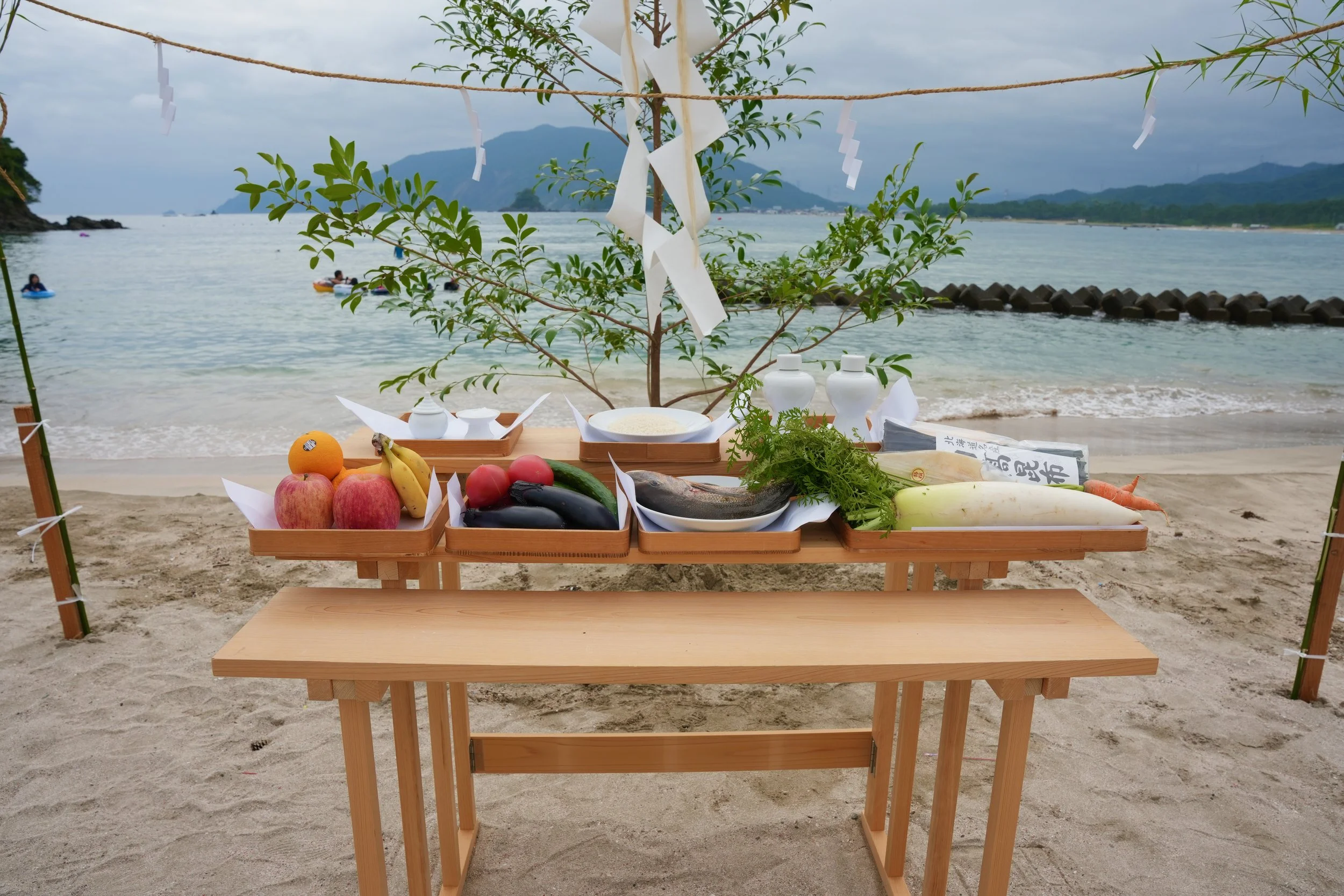
Offerings of fish, fruits, vegetables and sake are presented to the deities of the sea

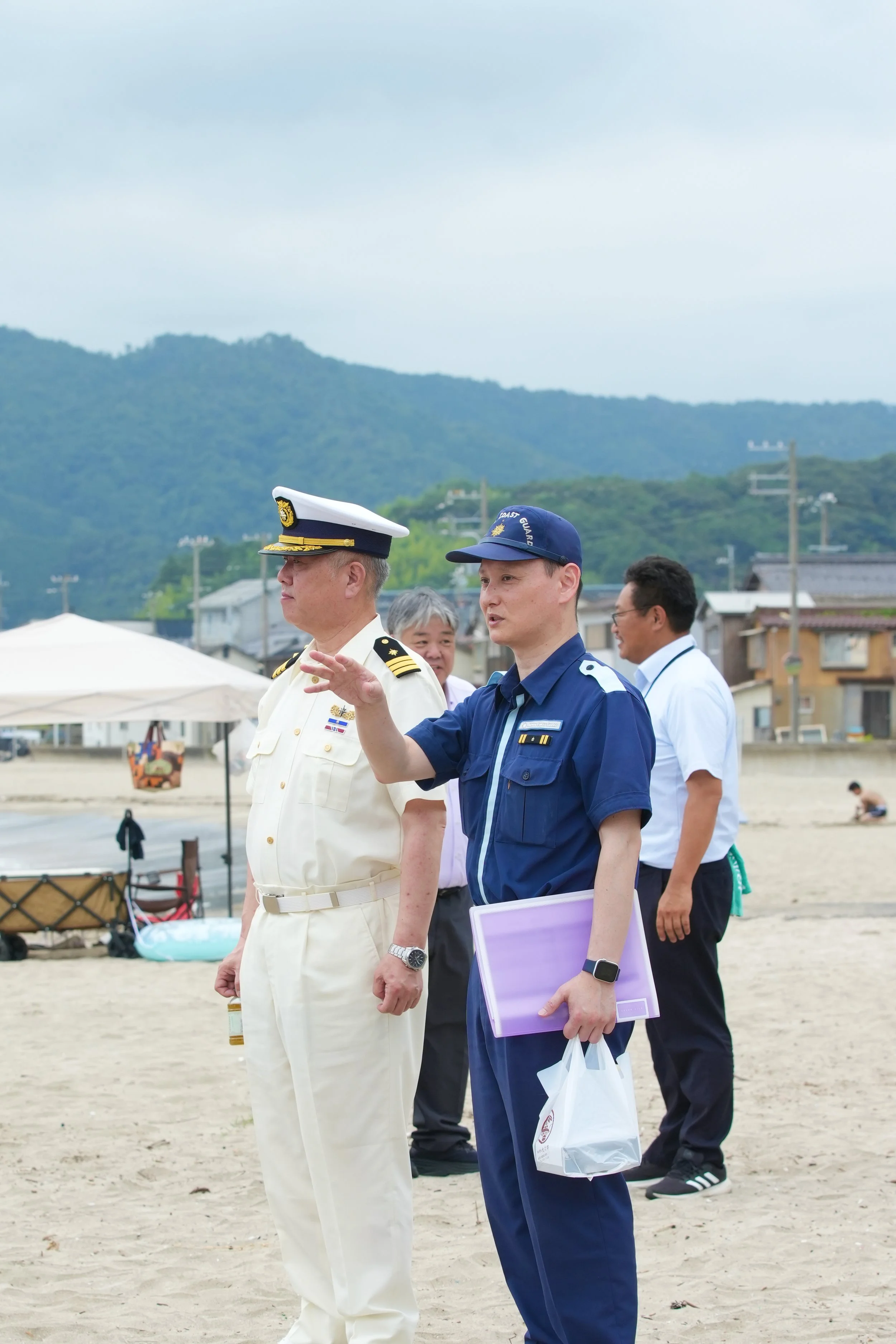


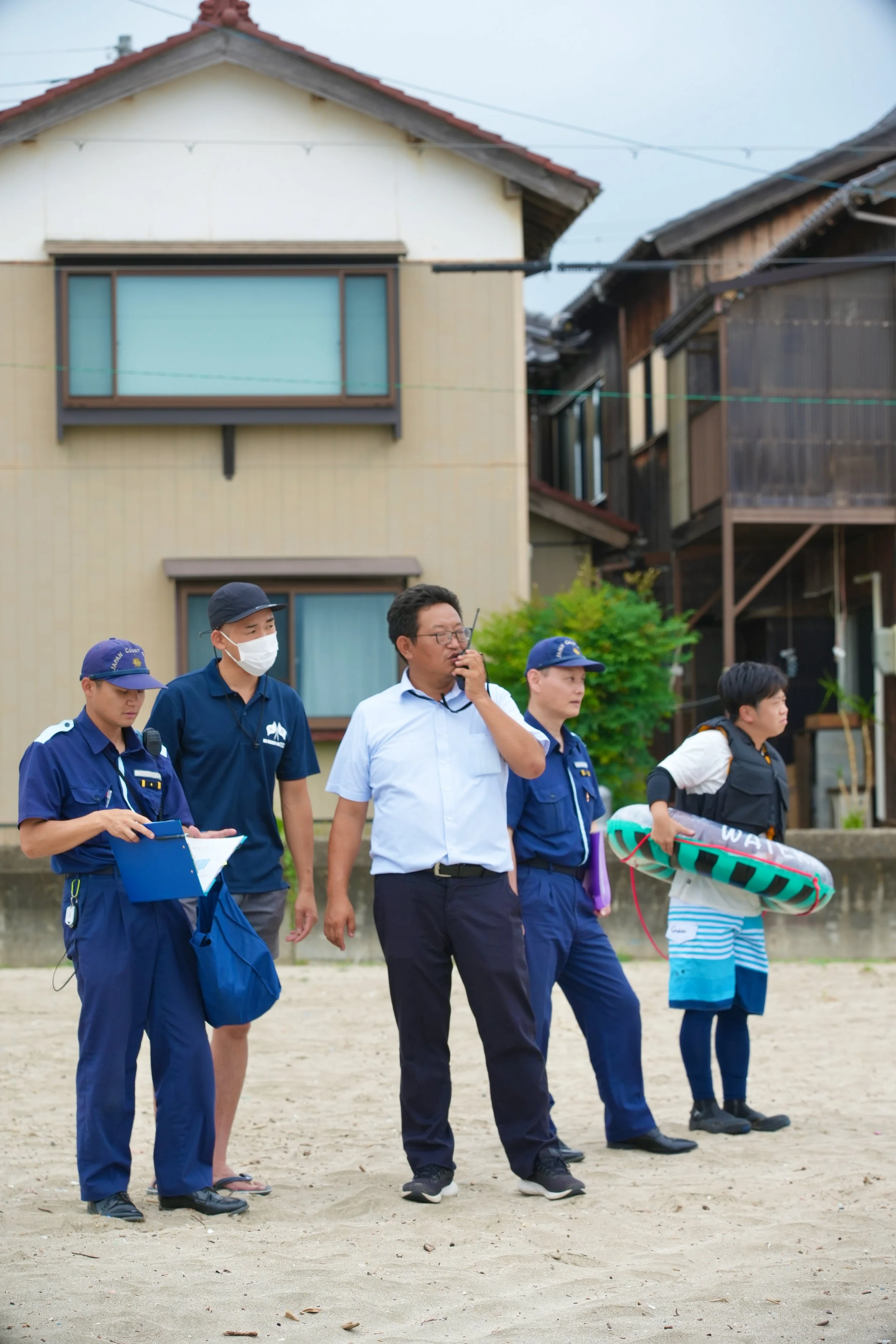
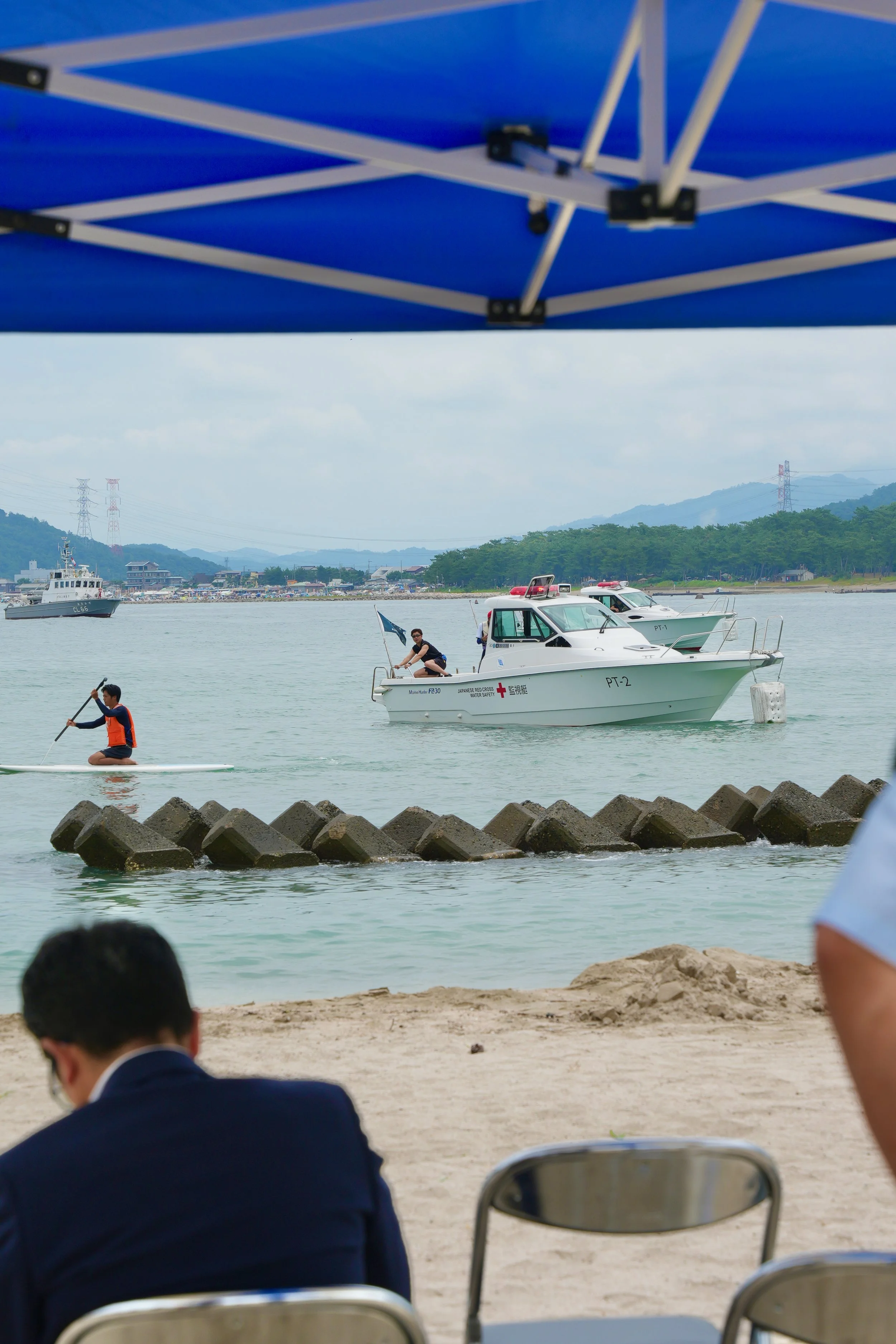
In modern Japan, the umi-biraki has evolved to meet contemporary life. While fewer communities depend on fishing alone, beaches are now shared spaces for swimmers, surfers, and sunseekers. Local governments and beach patrols host these ceremonies to mark the official start of the swimming season — often in early July, though the timing varies by region.
現代の日本では、海開きのかたちは時代とともに姿を変えてきました。漁業だけに生計を頼る地域は減った一方で、海辺は今や泳ぐ人、サーファー、日差しを楽しむ人々が集う、みんなの憩いの場となっています。多くの地域では、夏の海水浴シーズンの幕開けを告げるため、地元自治体やライフセーバーたちが中心となって海開きの神事を行います。地域によって時期はさまざまですが、例年7月上旬に行われることが多いです。
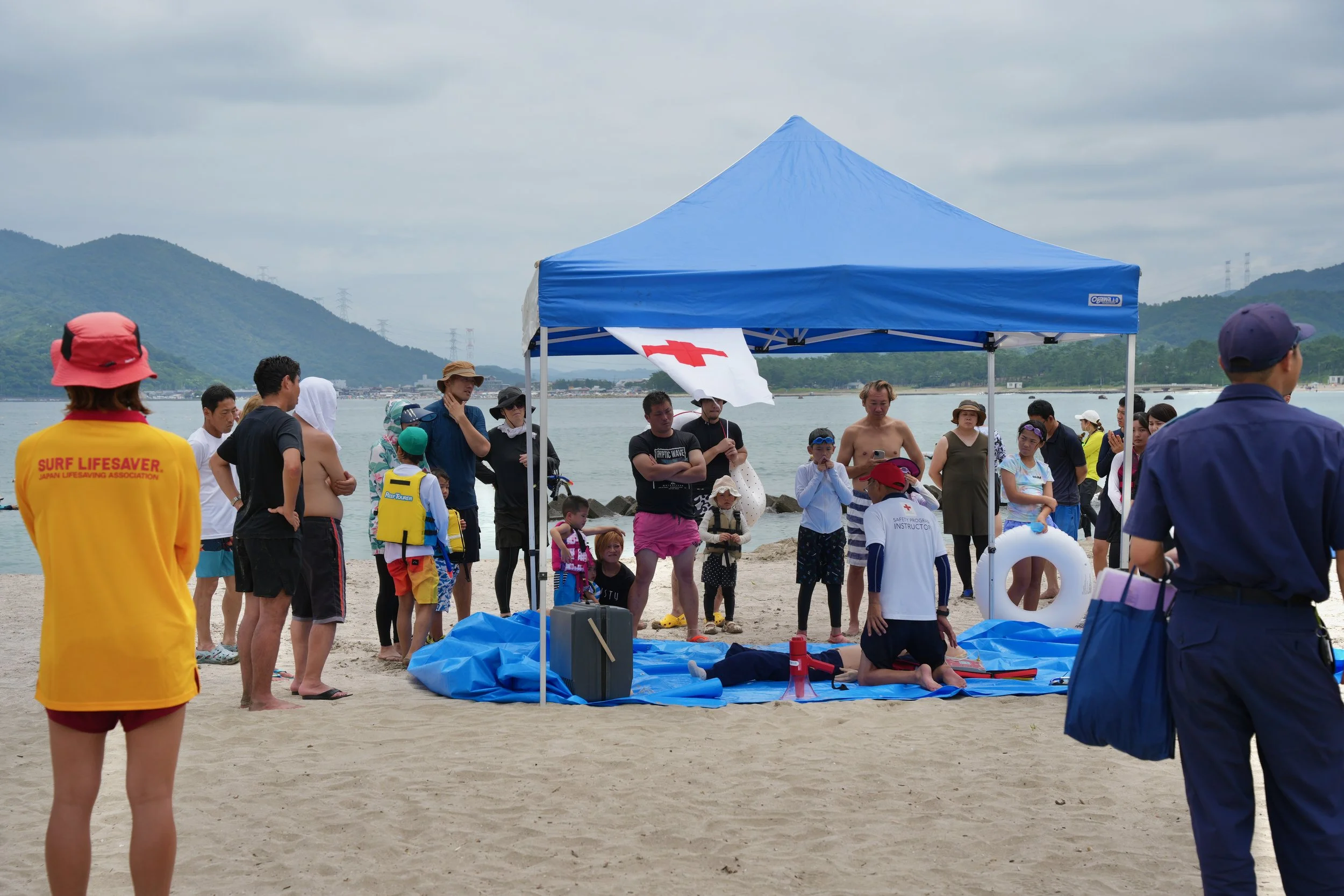
A local water safety instructor teaches beachgoers how to perform basic CPR.
In a world where traditions can easily slip away, this ceremony endures as a living link to the beliefs and practices that shaped Japan’s coastal communities. It reminds us that the ocean is not simply a backdrop for beach selfies or water sports — it can also be a place of wonder, danger, and deep cultural meaning.
伝統がいつしか薄れてしまいがちな現代においても、この海開きの儀式は、海辺の暮らしを支えてきた信仰や祈りの心を今に伝える生きたつながりとして受け継がれています。海はただのビーチフォトの背景やマリンスポーツの舞台ではなく、時に人を魅了し、時に危険をもたらす、深い文化的意味を宿す場所であることを、私たちに改めて思い出させてくれるのです。