To Consume or Experience Culture?
That is the question
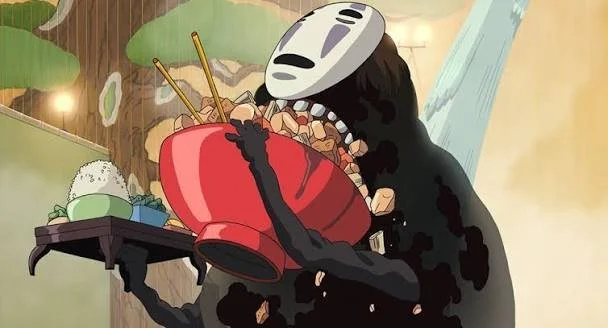
No-Face. A powerful metaphor. And also perhaps an accidental representation of the the modern tourist in Japan.
After returning from the seedy, neon-lit streets of Ikebukuro—a district where entertainment, commerce, and desire seem to converge at every corner; a place where everything appears to whisper (and sometimes scream), "Buy me. Drink me. Try me."—I found myself compelled to write about a subject that had occupied my thoughts for many years.
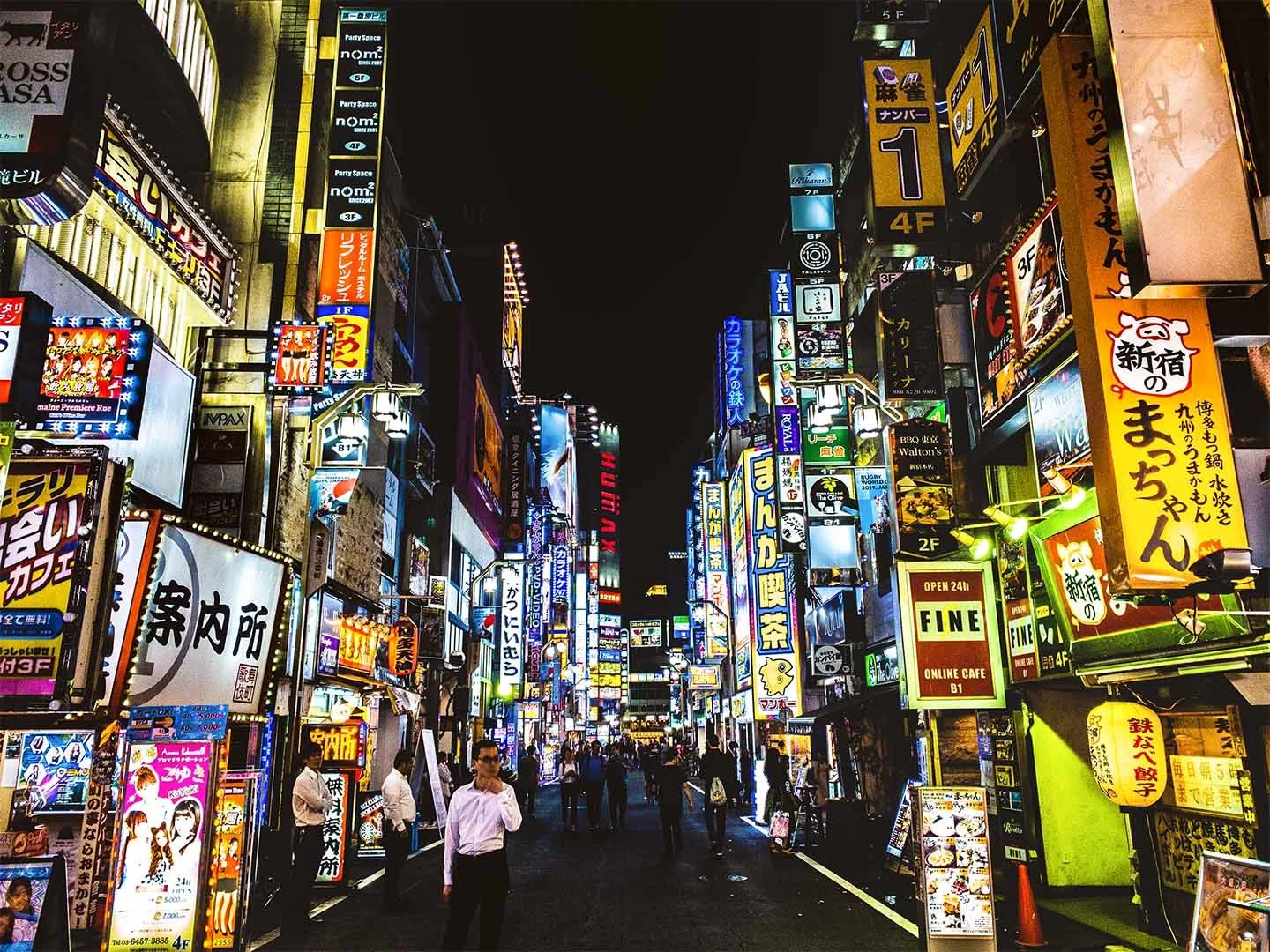
Perhaps not Ikebukuro but something similar
On my final morning there, as I made my way back to pack the car, I passed a young man slumped on the sidewalk, looking half dead from the previous night's excesses.
Nearby, a heavily intoxicated man staggered down the street at seven in the morning, eyes barely open, weaving from side to side. Young women stood outside bars and clubs, reduced to human advertisements competing for attention beneath ugly buildings.
Further along, a woman kicked and screamed in the middle of the street, while another sat alone, sobbing into her telephone as though her world had just fallen apart.
Under all of this, I found myself retreating inward. The scenes around me felt less like isolated incidents and more like symptoms of something larger—a modern culture obsessed with stimulation, distraction, and desire. As I watched it all unfold, I couldn't help but think that I had seen enough.
It was definitely time to leave.
I packed my Suzuki Jimny (an extension of my home) and sped my way out of there, desperate to return to my peaceful sanctuary in Sueno, Fukui.
On the drive back, however, the questions those streets raised began to flood my mind and I decided I would express them in words first rather than another Instagram video/blog/thing.
My Thoughts
Many travelers, particularly those who visit Japan for a short period of time, spend way too much time consuming the culture rather than truly experiencing it.
They often move rapidly from one famous attraction to the next, Instagramming the hell out of anything and everything that dazzles and sparkles, filling their suitcases with cheap and often useless plastic mass-manufactured souvenirs made in China, and eating anything they can get their hands on - even if they are not really hungry.
While this is all great for the economy (how much so, I couldn’t say) I have the nagging feeling that many such travelers eventually leave Japan without developing a deeper understanding of the people, history, or values that shape the country. And if they do manage to return, they just repeat the same thing over and over again.
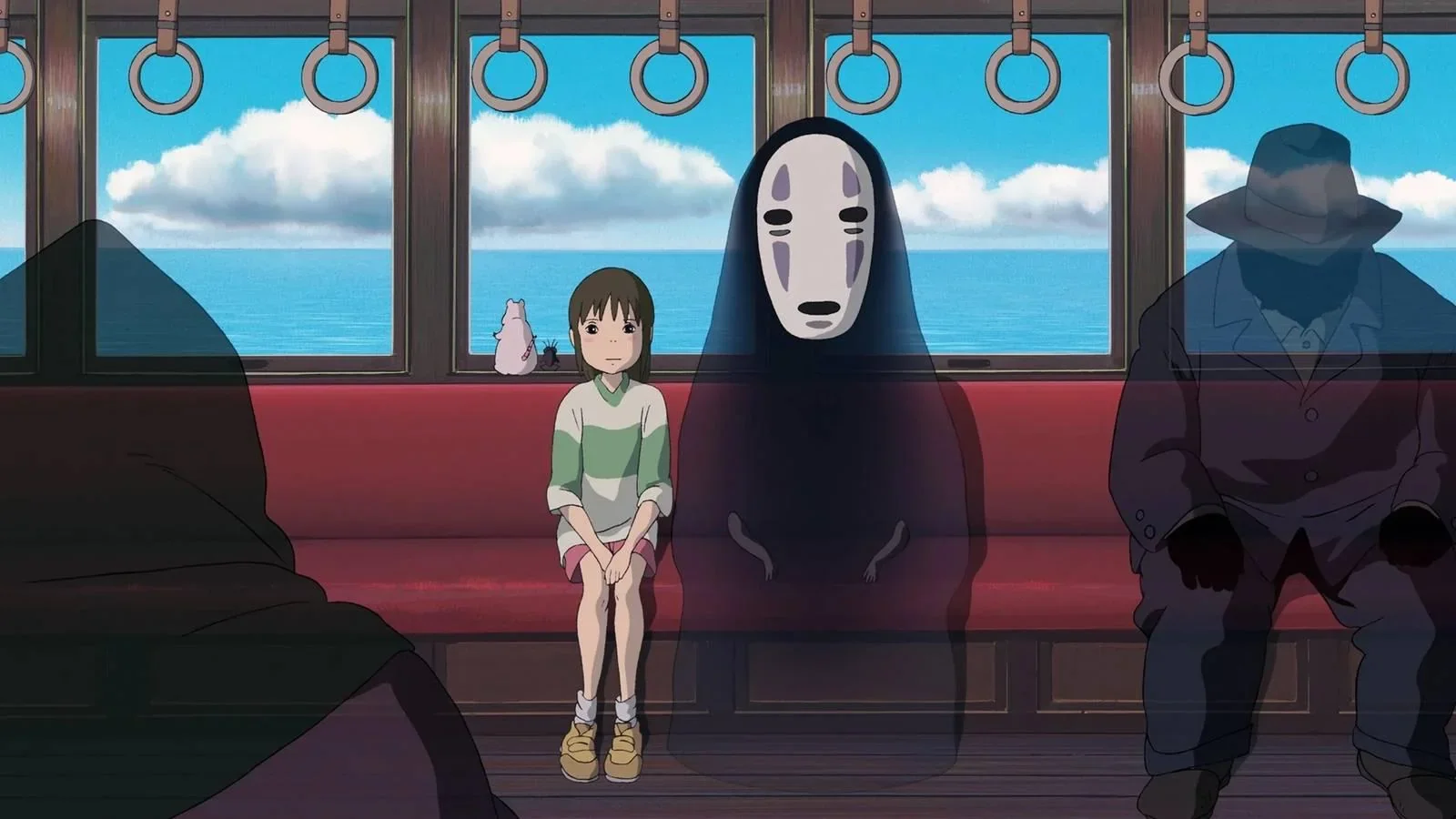
The core message of Hayao Miyazaki's 2001 film Spirited Away.
How much of what we desire is a genuine need, and how much is an attempt to fill an inner emptiness?
The phenomenon of modern consumer culture is both somberly, and at times rather dramatically, reflected in Hayao Miyazaki's 2001 film Spirited Away. Throughout the film, the character No-Face embodies an endless hunger for consumption. The more he acquires and devours, the more dissatisfied and distorted he becomes. In many ways, this mirrors our modern approach to tourism, where experiences are treated as products to be collected rather than opportunities for meaningful engagement.
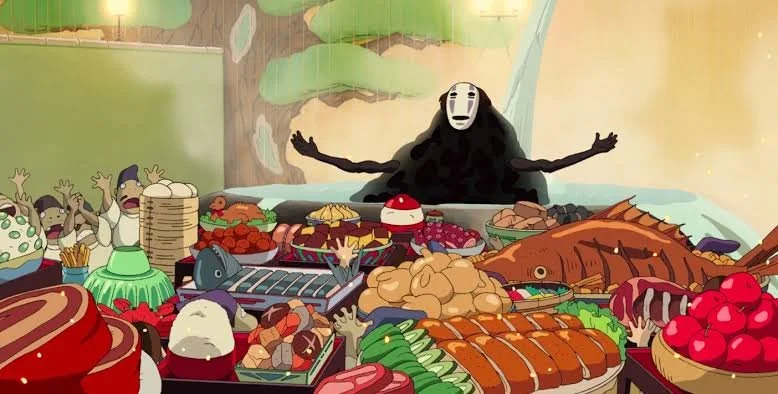
Consumption: an attempt to fill a spiritual hunger that material things cannot truly satisfy.
Many viewers consider the character No-Face to be one of Miyazaki's most profound symbols because he embodies a question that modern society still struggles with. How much of what we desire is a genuine need, and how much is an attempt to fill an inner emptiness?
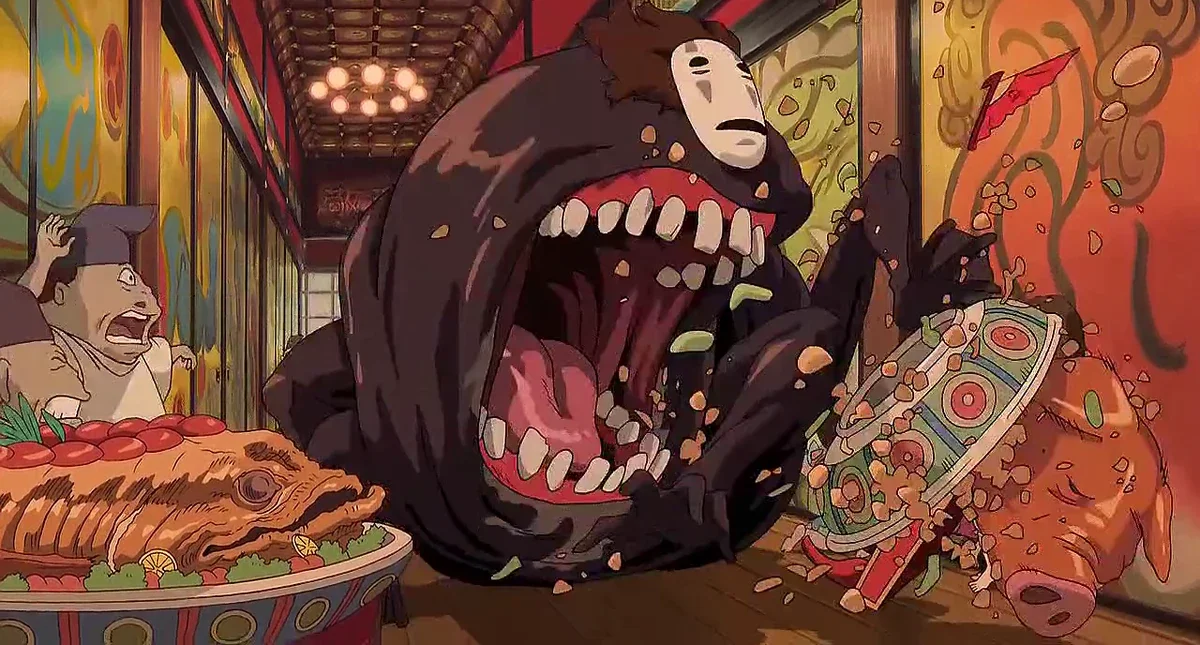
The more No-Face consumes, the emptier he becomes.
In the bathhouse, No-Face literally devours food and people. Yet nothing satisfies him. Because he has no center, he defines himself through acquisition and imitation. Psychologically, this can represent people who try to fill an inner emptiness through:
Buying things
Status
Achievement
Social approval
So until now, I have described the phenomenon of consuming culture through the metaphor of No-Face. As a side note, I would urge people to re-watch the movie with this in mind and see if you can draw your own conclusions from it. But for now, let’s look at an alternative avenue to culture.
Experiencing culture is a far deeper and rewarding way to connect with the world around you. It requires a little more observation and becoming a little more conscious of your surroundings. By experiencing culture, you give yourself a chance to change your inner world. However, experiencing culture requires a different mindset.
While this topic deserves an entirely separate article (one in which I will probably begin writing after this one) I will touch on the basic premise.
Consuming culture and experiencing culture are not the same thing. Consumption is often transactional. A traveler visits a famous temple because it appears in a guidebook, eats at a restaurant because it is trending online, wears a kimono for a photograph, or rushes from one attraction to the next collecting memories, souvenirs, and social media content along the way.
The culture becomes something to acquire, much like a product on a shelf. While there is nothing inherently wrong with this approach, it often prioritizes entertainment, novelty, and convenience over understanding. The destination becomes a backdrop, and the traveler remains largely unchanged.
Experiencing culture, by contrast, is relational. Rather than asking, “What can I get from this place?” the traveler asks, “What can this place teach me?” This may involve speaking with local people, learning the stories behind historical sites, participating in community events, volunteering, or simply slowing down long enough to observe everyday life.
Through these experiences, culture becomes more than a collection of attractions—it becomes a way of understanding how other people see the world. The reward is not merely a photograph or a souvenir, but a deeper sense of connection, empathy, and personal growth. In this sense, travel ceases to be an act of consumption and becomes a genuine encounter with another way of life.
One of my goals in Japan is to provide this avenue to people who wish to shift from consuming culture to experiencing it. More on that coming soon.
Thanks for reading,
Bryan