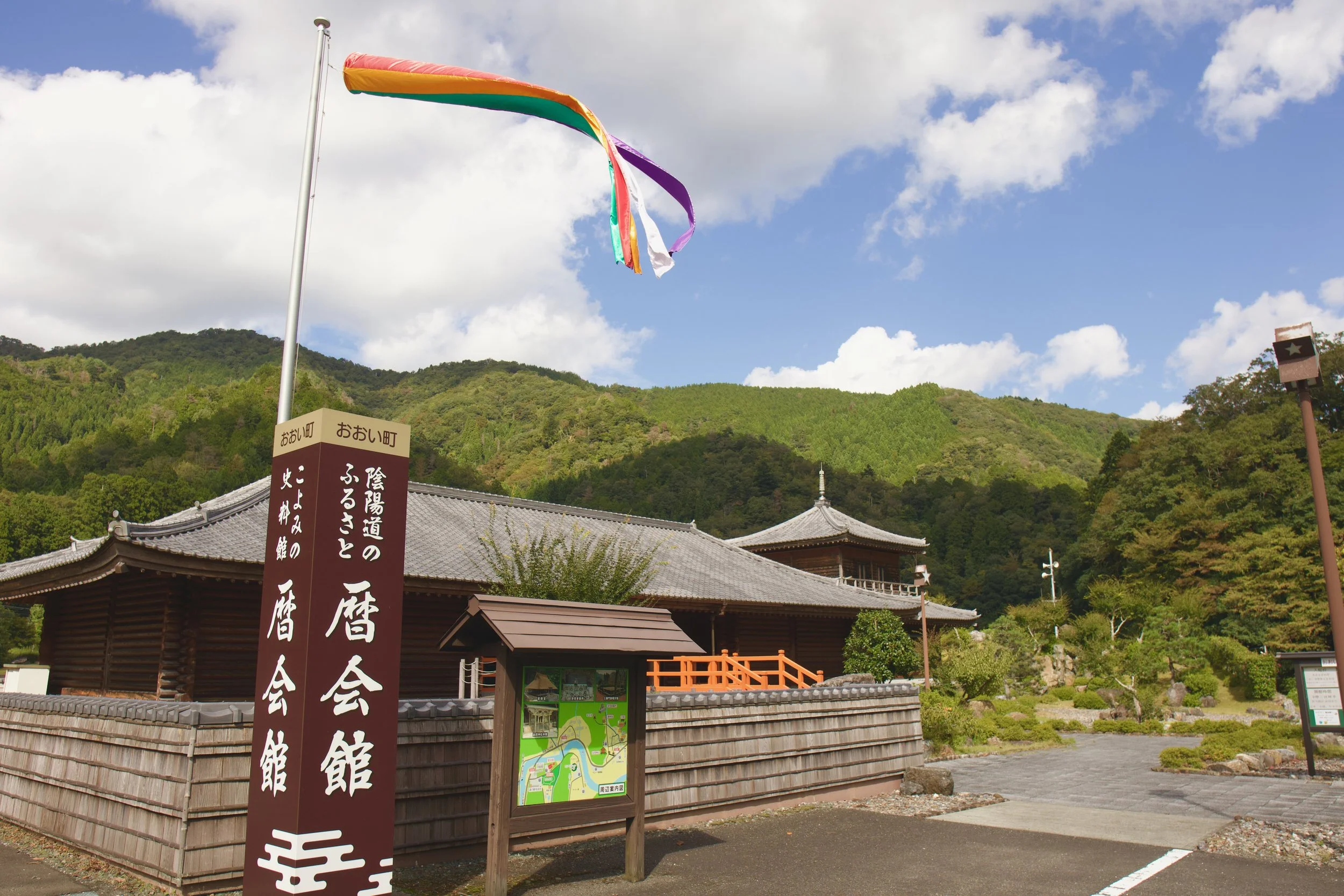
Tucked deep in the forested mountains of the Natasho district in Oi Town, Fukui Prefecture, sits one of Japan’s most unusual cultural institutions: the Koyomi Kaikan (Oi Town Calendar Museum). While many travelers head into the region seeking waterfalls and hiking trails, this quiet museum offers an unexpected journey into how ancient Japan measured time, read the stars, and organized daily life.
The Legacy of Onmyōdō and the Tsuchimikado Clan
The museum’s location is far from accidental. Natasho served as a historical refuge for the Tsuchimikado family, descendants of Abe no Seimei—the legendary master of Onmyōdō (the ancient Japanese practice of esoteric cosmology, astronomy, and divination). During the Sengoku period’s civil wars, the family fled the instability of Kyoto and relocated their headquarters to this secluded valley, bringing centuries of astronomical records and calendar-making secrets with them.
What to See Inside
Koyomi Kaikan is recognized as Japan’s only museum dedicated primarily to historical calendars. Key highlights include:
Ancient Almanac Exhibits: Rare manuscripts, woodblock-printed almanacs, and lunar calendars dating across different eras of Japanese history, illustrating how early societies tracked farming cycles, auspicious days, and seasonal shifts.
Astronomical Instruments: Replicas and preserved apparatuses once used by court astronomers to chart celestial movements and forecast solstices.
Onmyōdō Heritage: Detailed displays and historical artifacts exploring the role divination, yin-yang philosophy, and the Five Elements played in shaping the official imperial calendar.
Even if an unexpected detour shifts your travel plans in Oi Town, Koyomi Kaikan makes for a deeply rewarding stop. It bridges the gap between natural science and ancient spiritual thought, showing how rural Fukui safeguarded Japan's understanding of time for generations.