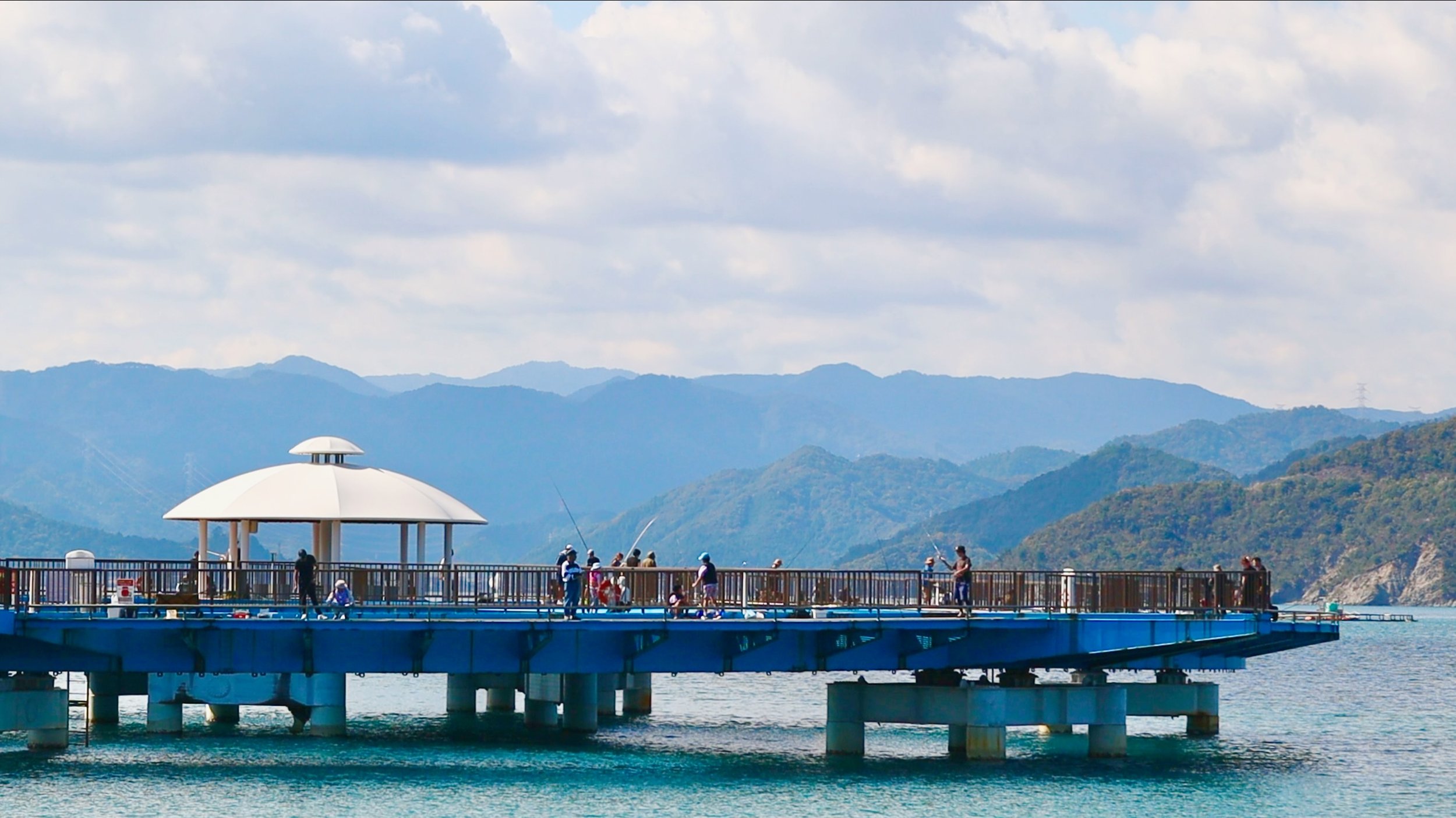
To truly experience the outdoors of Fukui's Reinan region, you must look to the sea. Here, dramatic shoreline views meet a deep maritime heritage rooted in quiet harbor towns and traditional seafaring life.
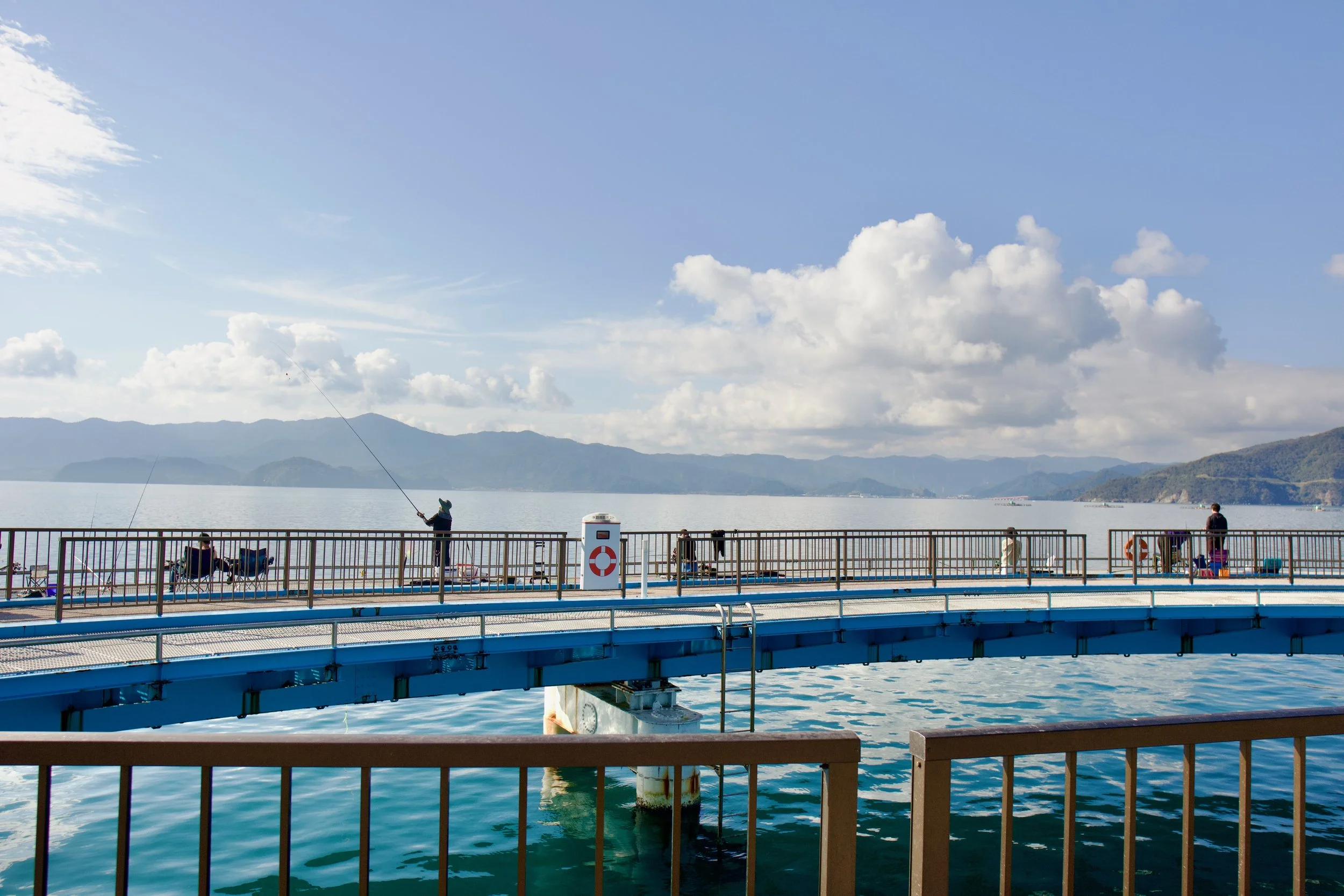
Tucked away at the tip of Oi Town’s Oshima Peninsula, Akaguri Fishing Park offers one of the most accessible gateways into this local pastime.
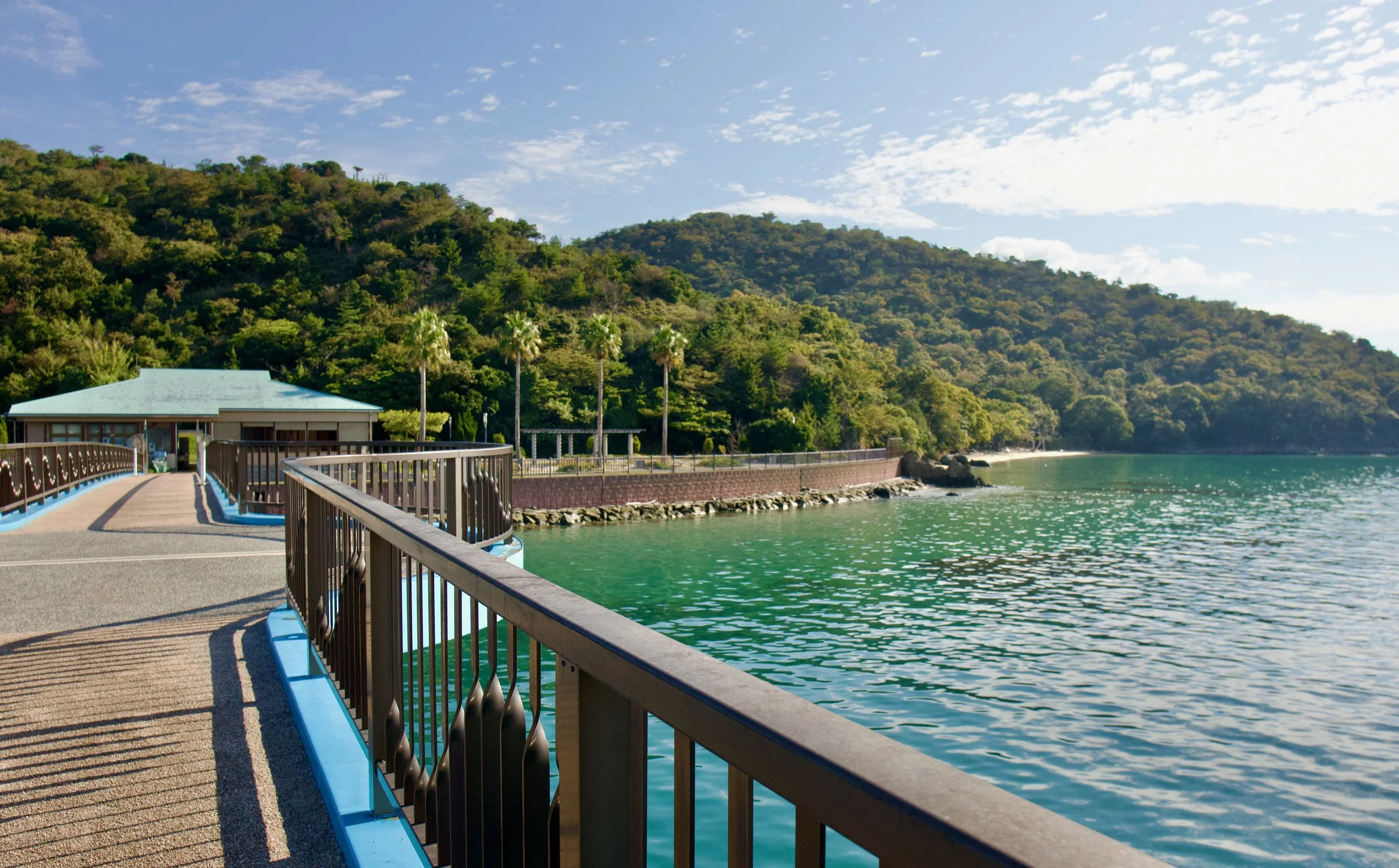
With its expansive, well-equipped ocean pier and calm, sheltered bay waters, the park makes open-sea fishing effortless for first-timer to seasoned anglers.
As autumn brings peak fishing conditions, we packed our rods and other fishing gear and headed down the peninsula to cast a line and experience the pier firsthand.
Arriving on the Oshima Peninsula
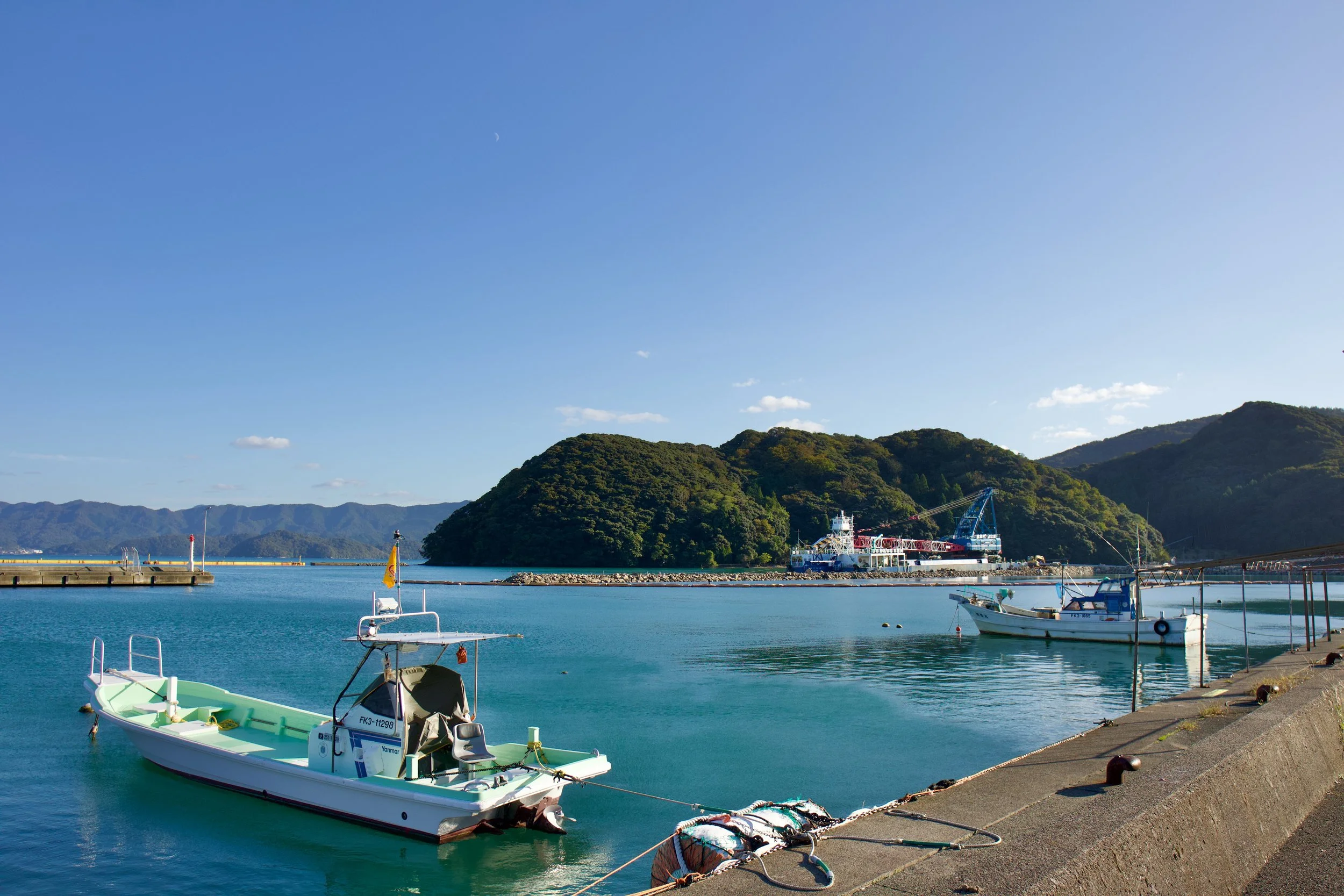
The drive along the coastal road takes you past quiet fishing villages where working trawlers rest in shallow harbor waters. As you get closer to the fishing park, traditional Japanese inns (ryokan) line one side of the road, while on the other, small wooden piers and bobbing boats frame the bright blue bay beyond.
The Fishing Experience
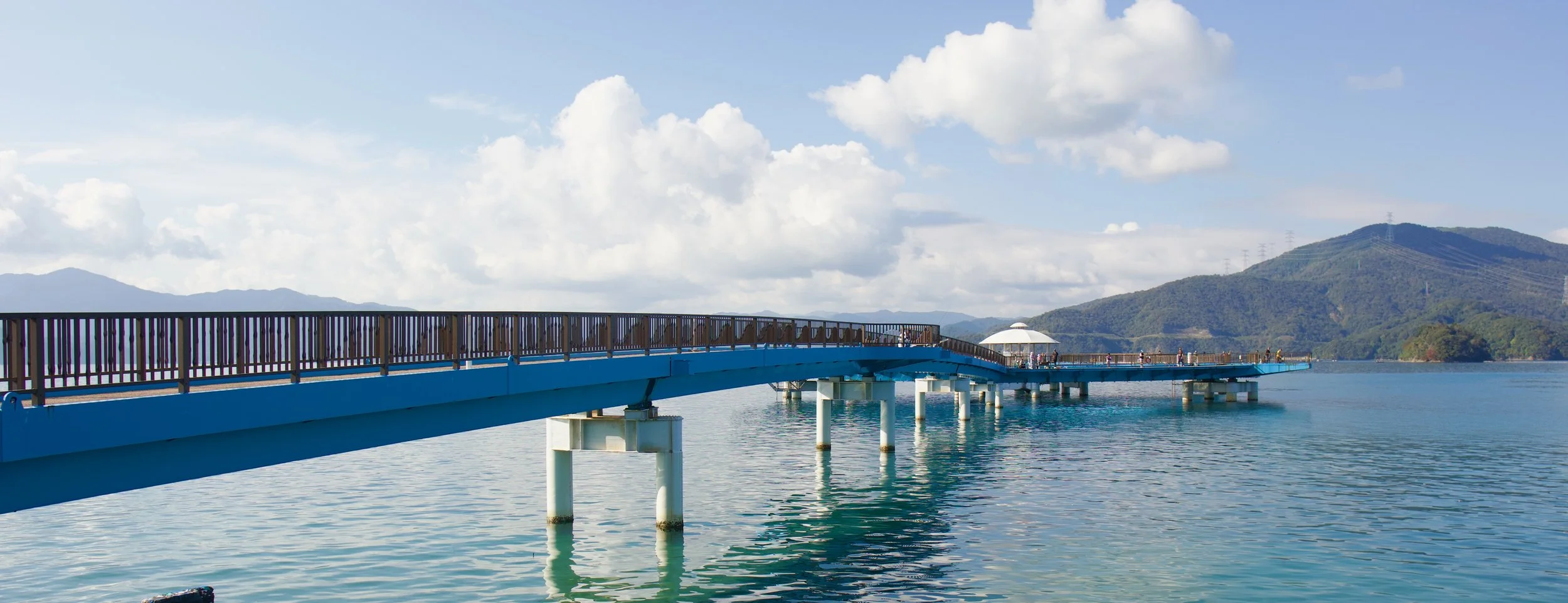
From the reception area, a striking 100-meter pedestrian bridge stretches out over the water toward the primary fishing pier. Crossing it offers sweeping, 360-degree views of the surrounding hills and harbors.
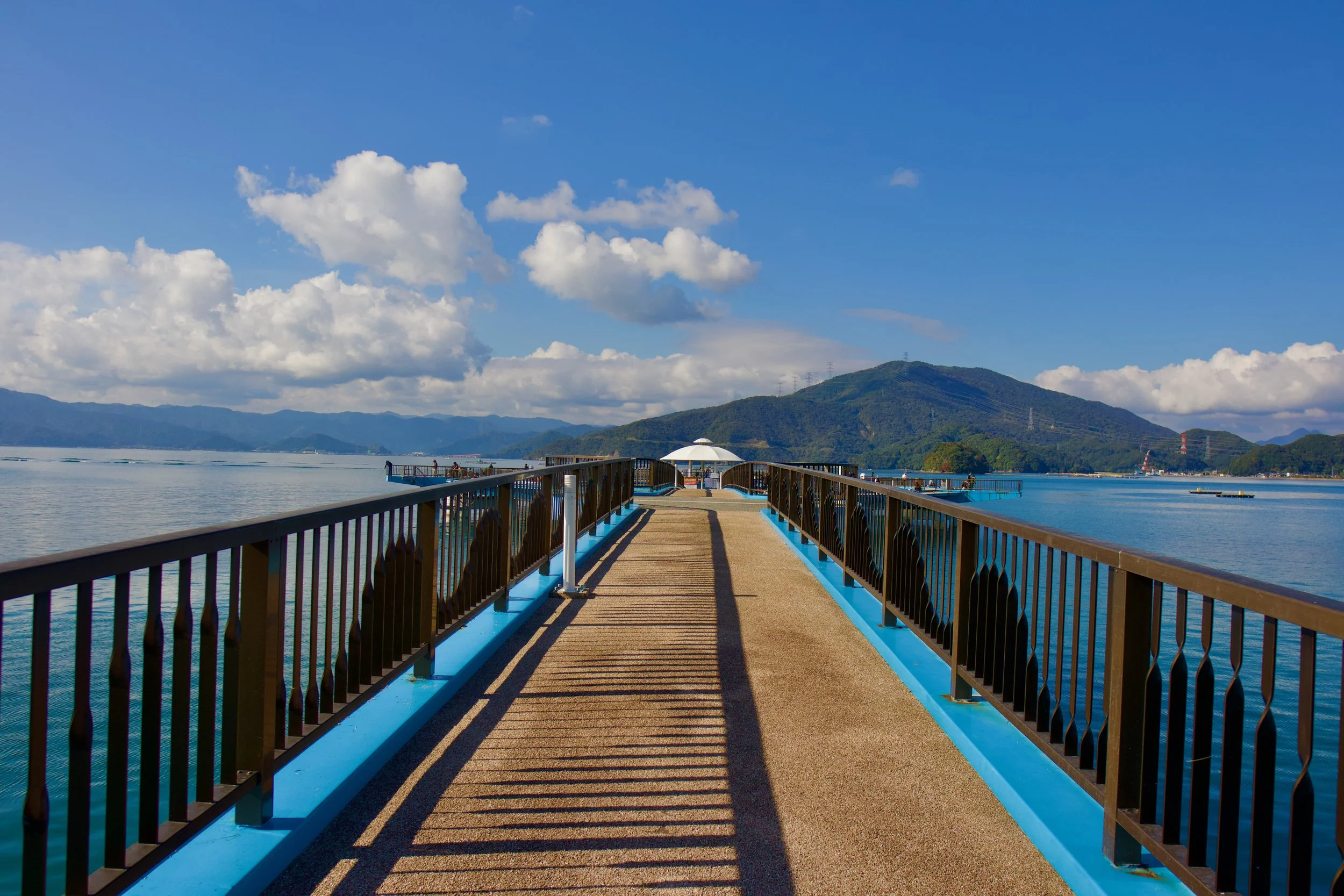
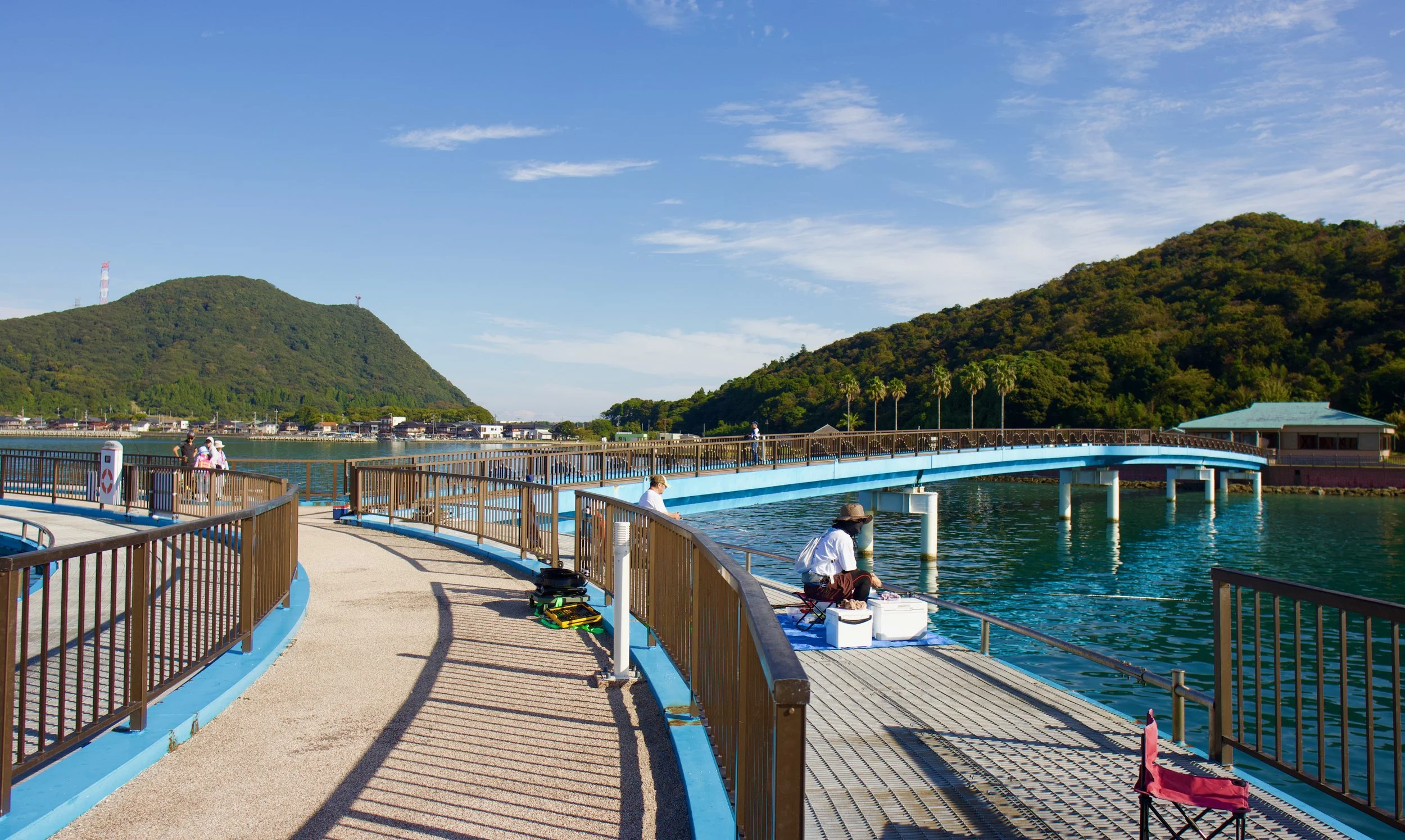
On this sunny day, the fishing park was already lively with plenty of anglers by 8:00 AM.
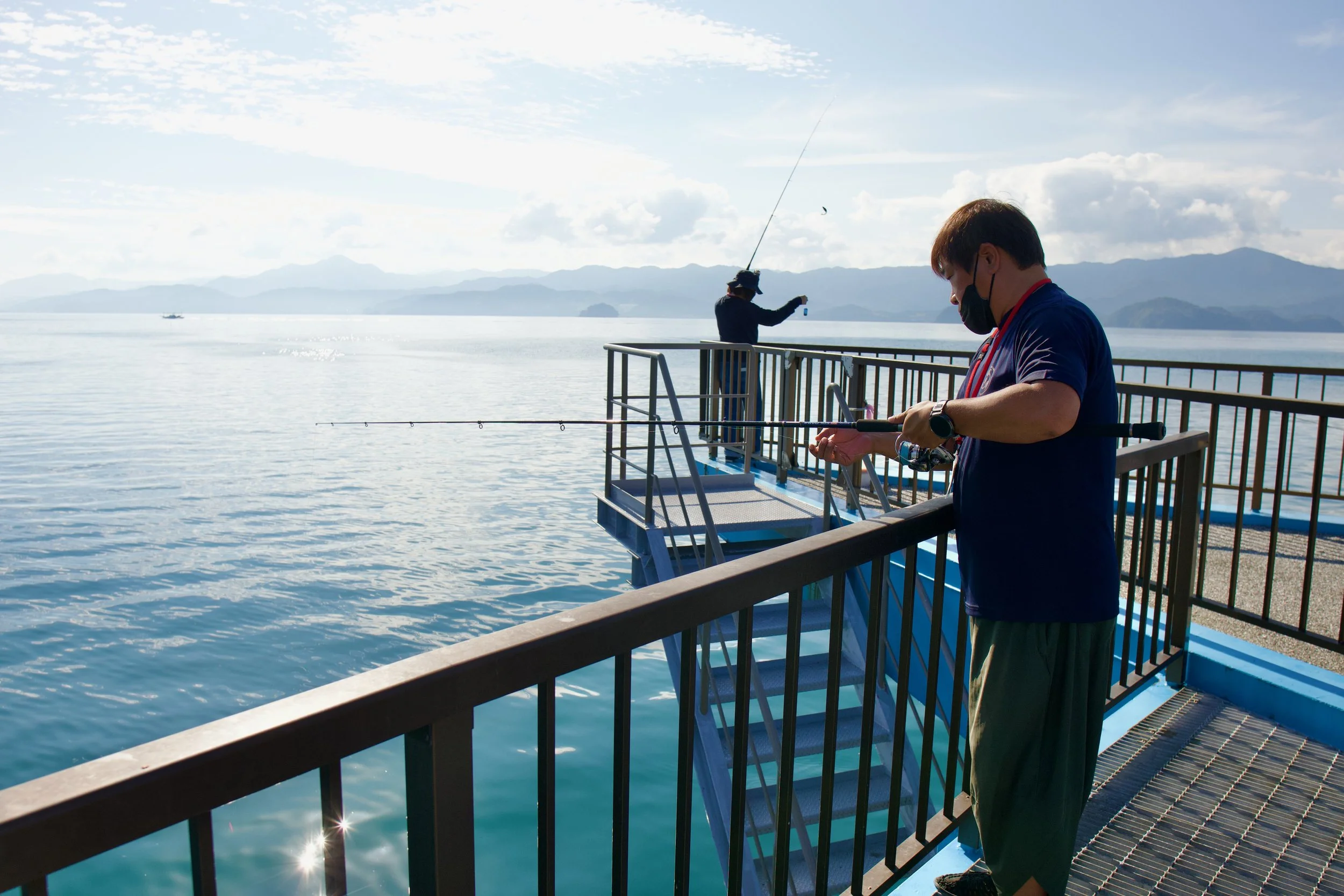
We set up my spot near the middle section, lowered a simple multi-hook with some shrimp bait into the clear water below, and within minutes felt the telltale tug of something, perhaps a horse mackerel? Whatever it was, it unfortunately got away!
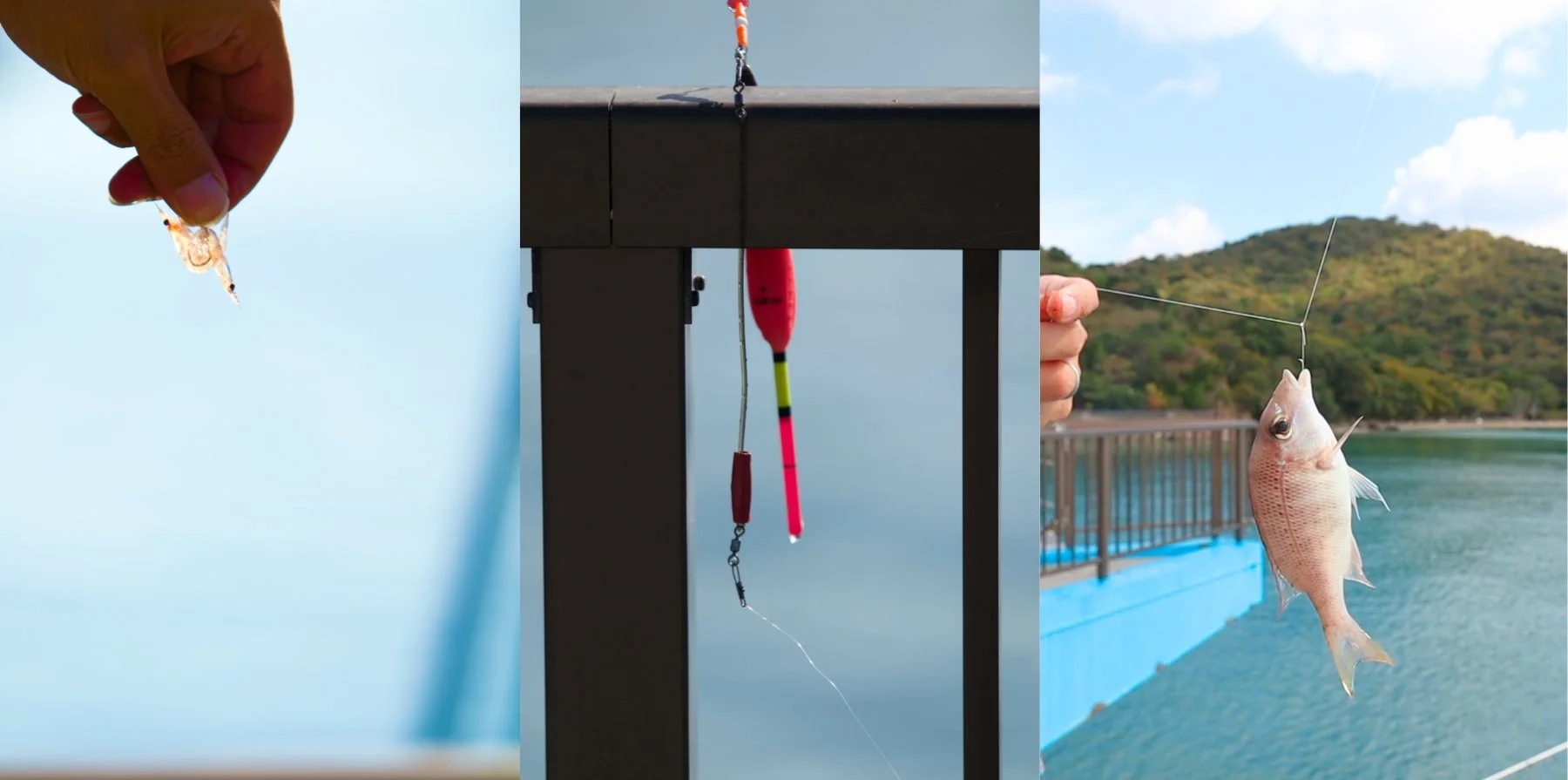
A beautiful, palm-sized young red sea bream
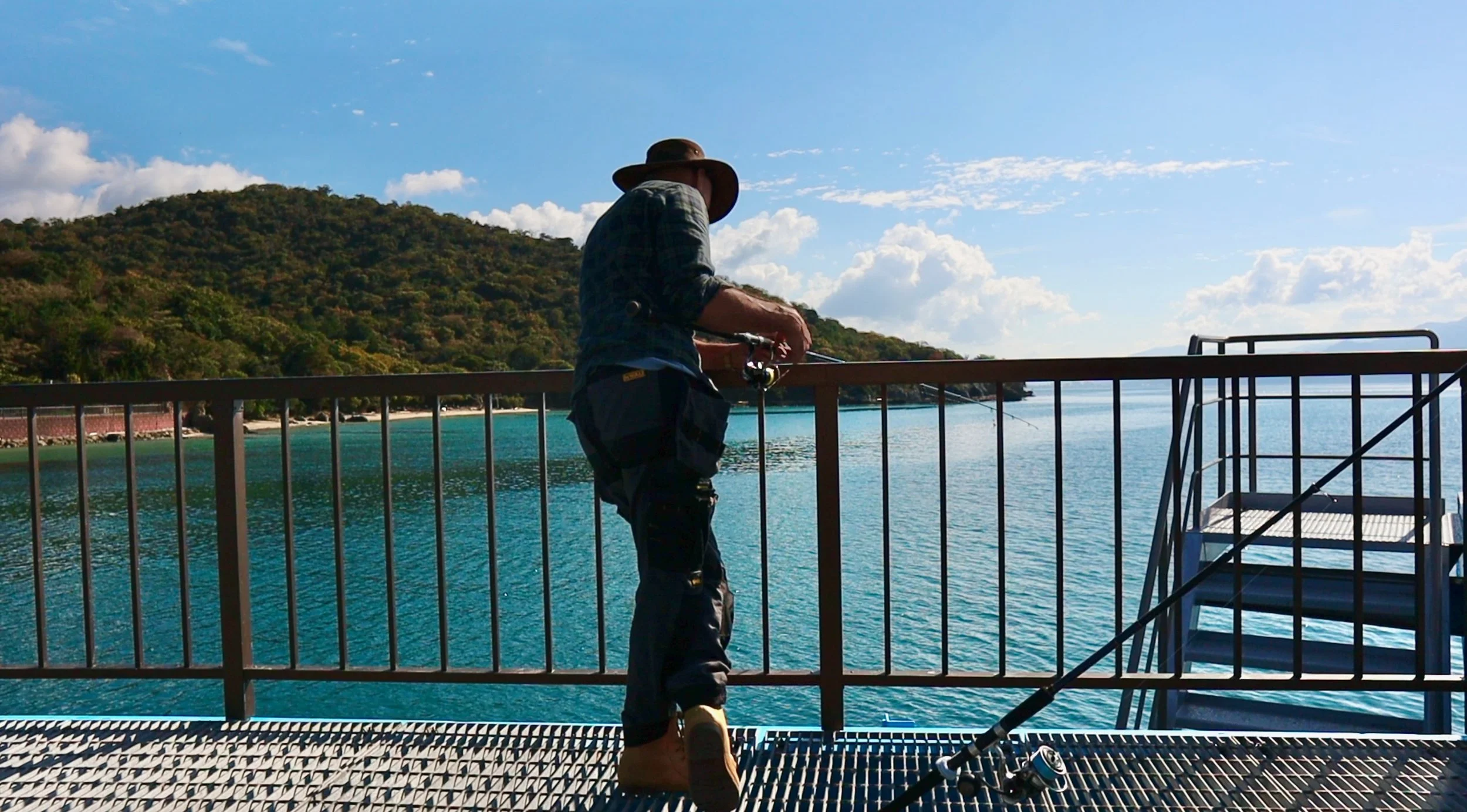
I felt my line tug several times at this spot!
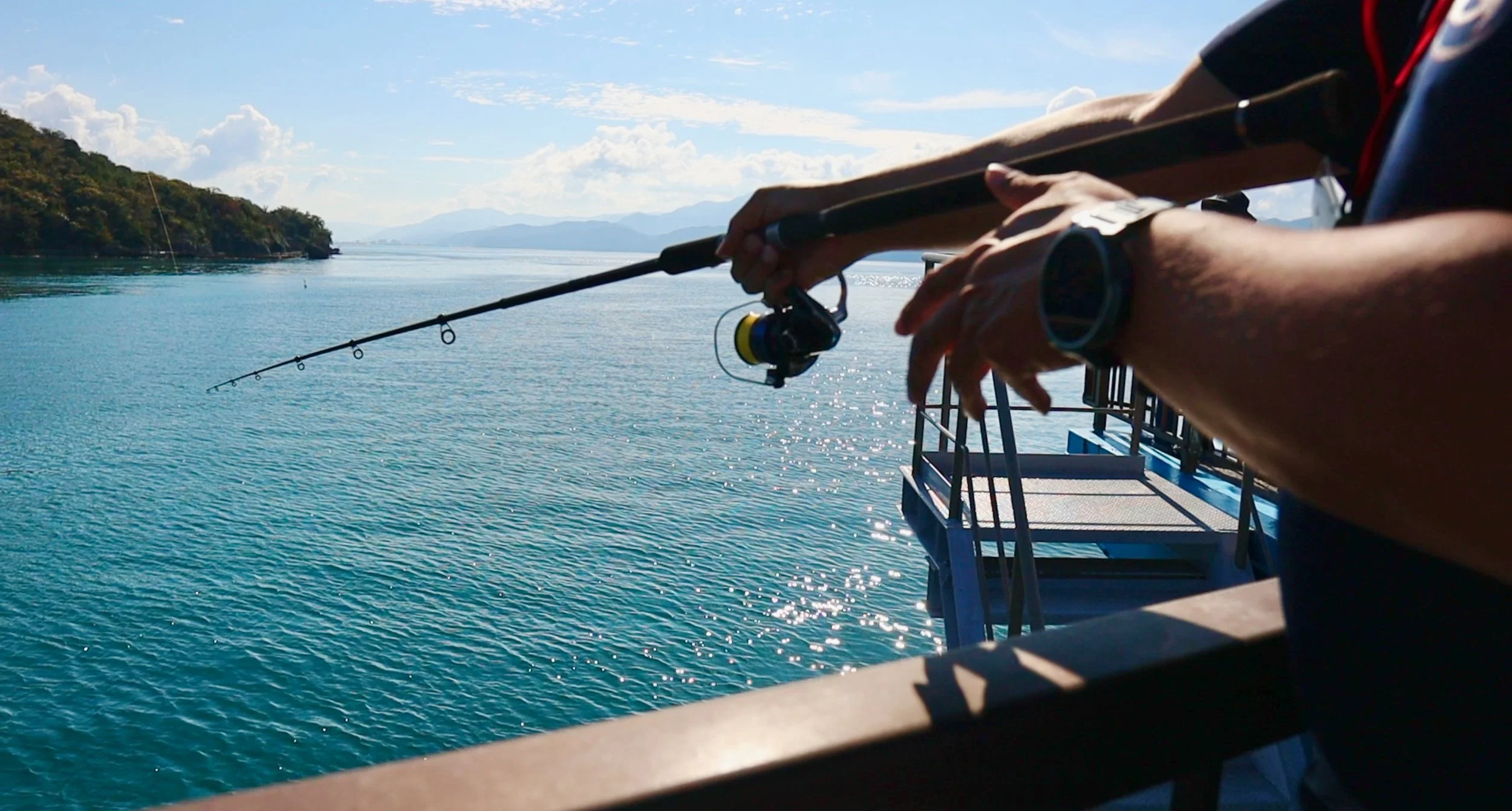
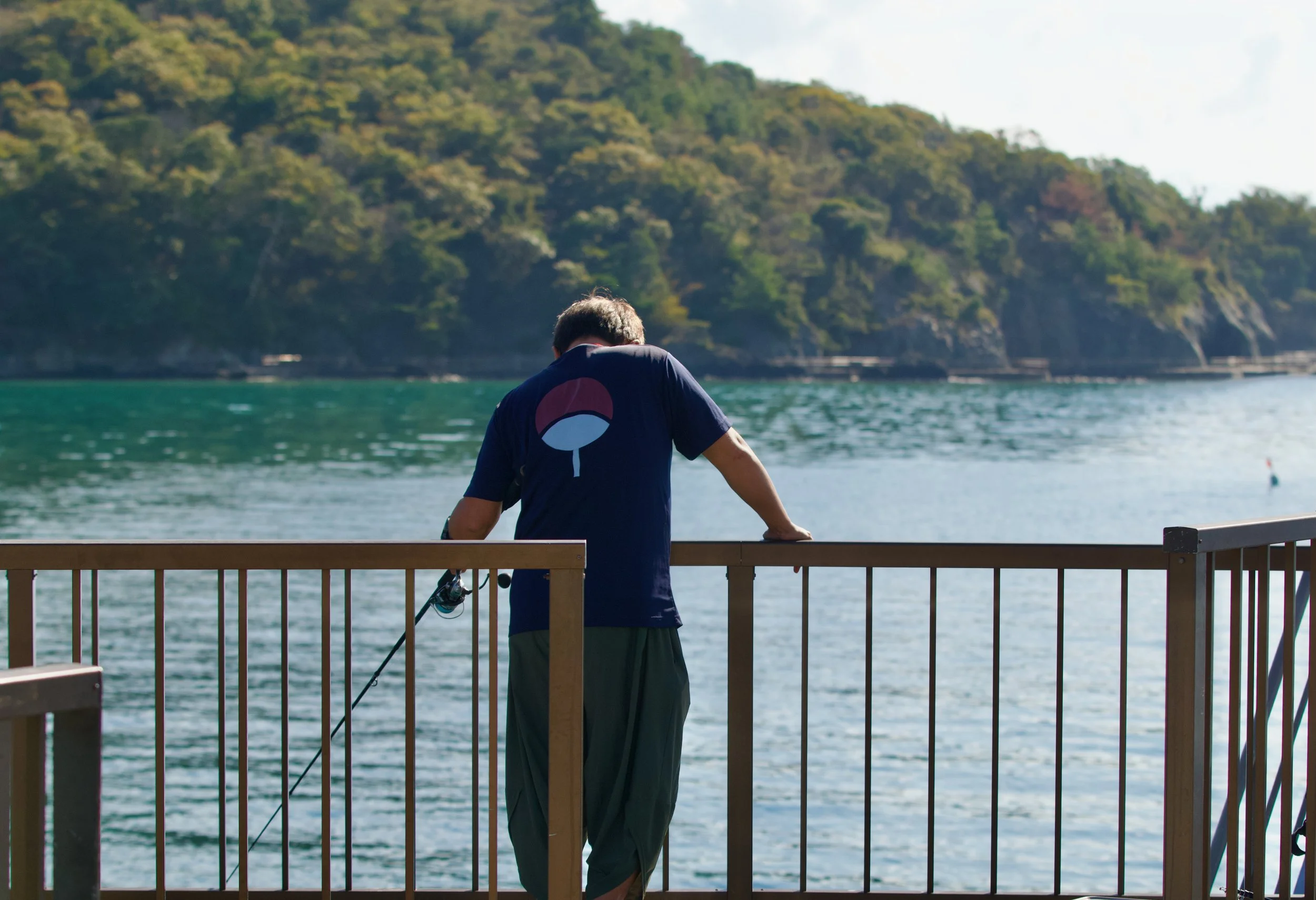
Practicing casting techniques and rig drop timing
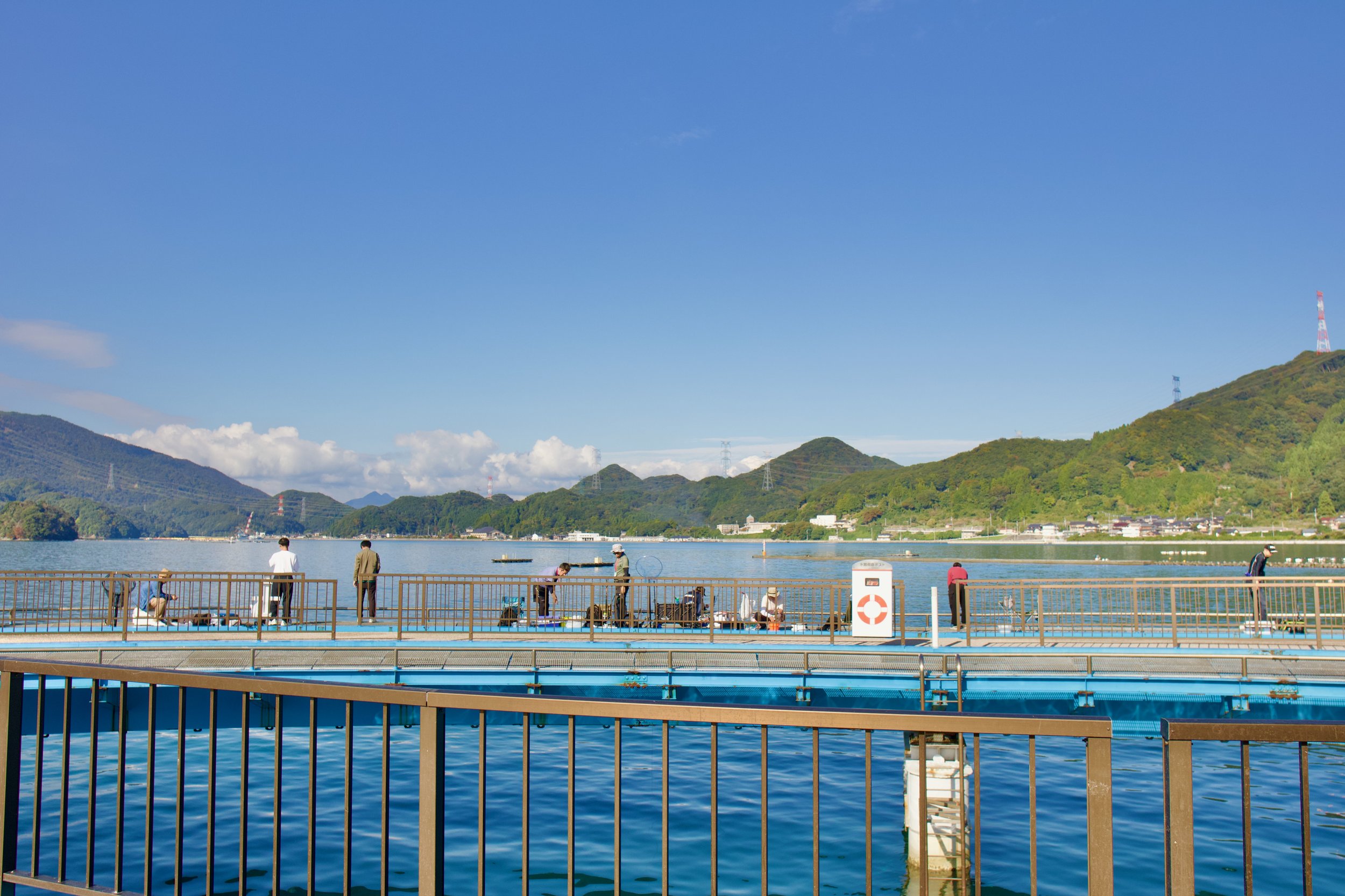
Thanks to the expansive, open deck layout, if the bites slow down in one spot, you can easily walk over to another section of the pier and try your luck at several different areas.
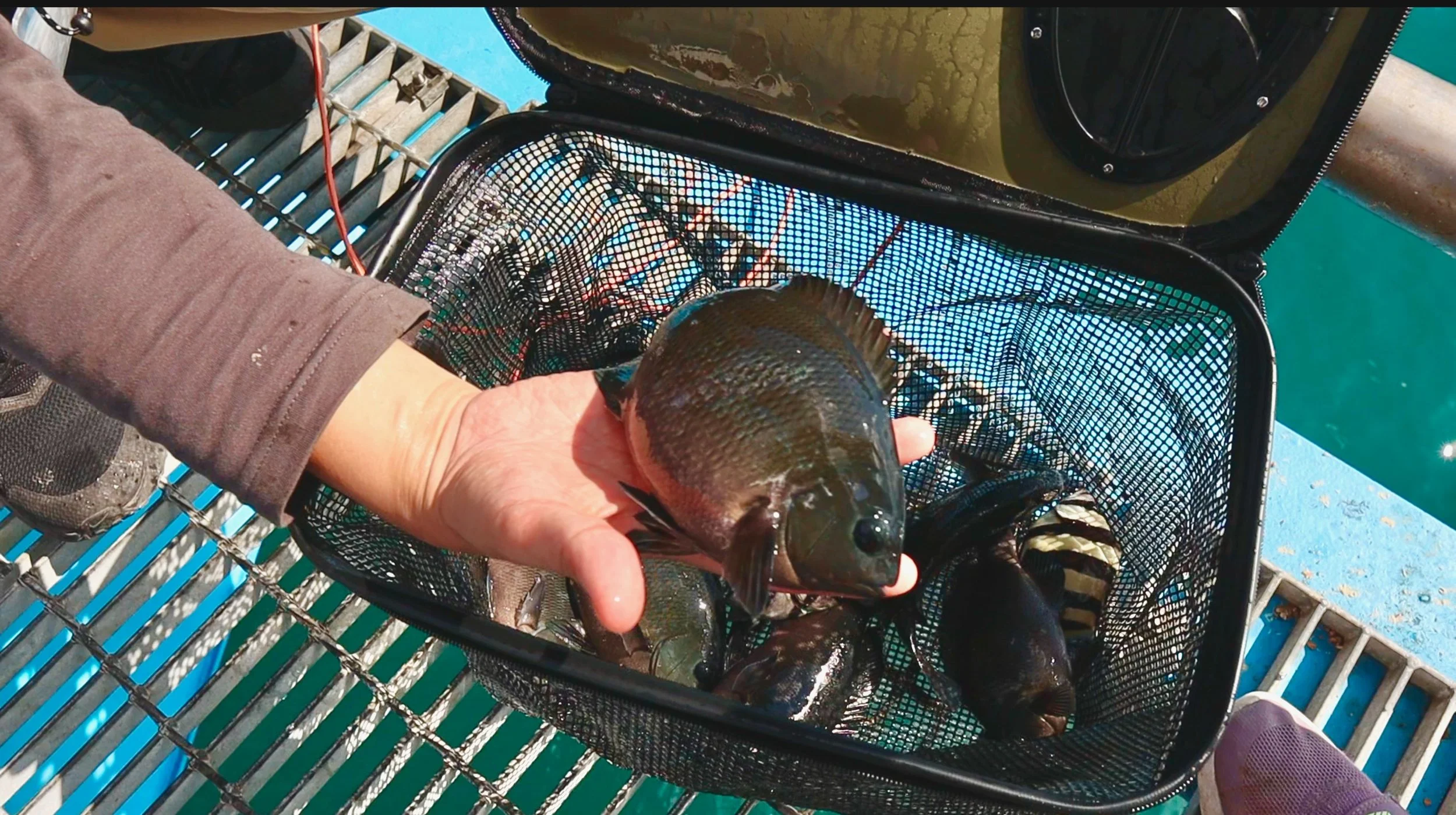
A visitor from outside the prefecture kindly showed us some of this morning's catch: A Black Rockfish!
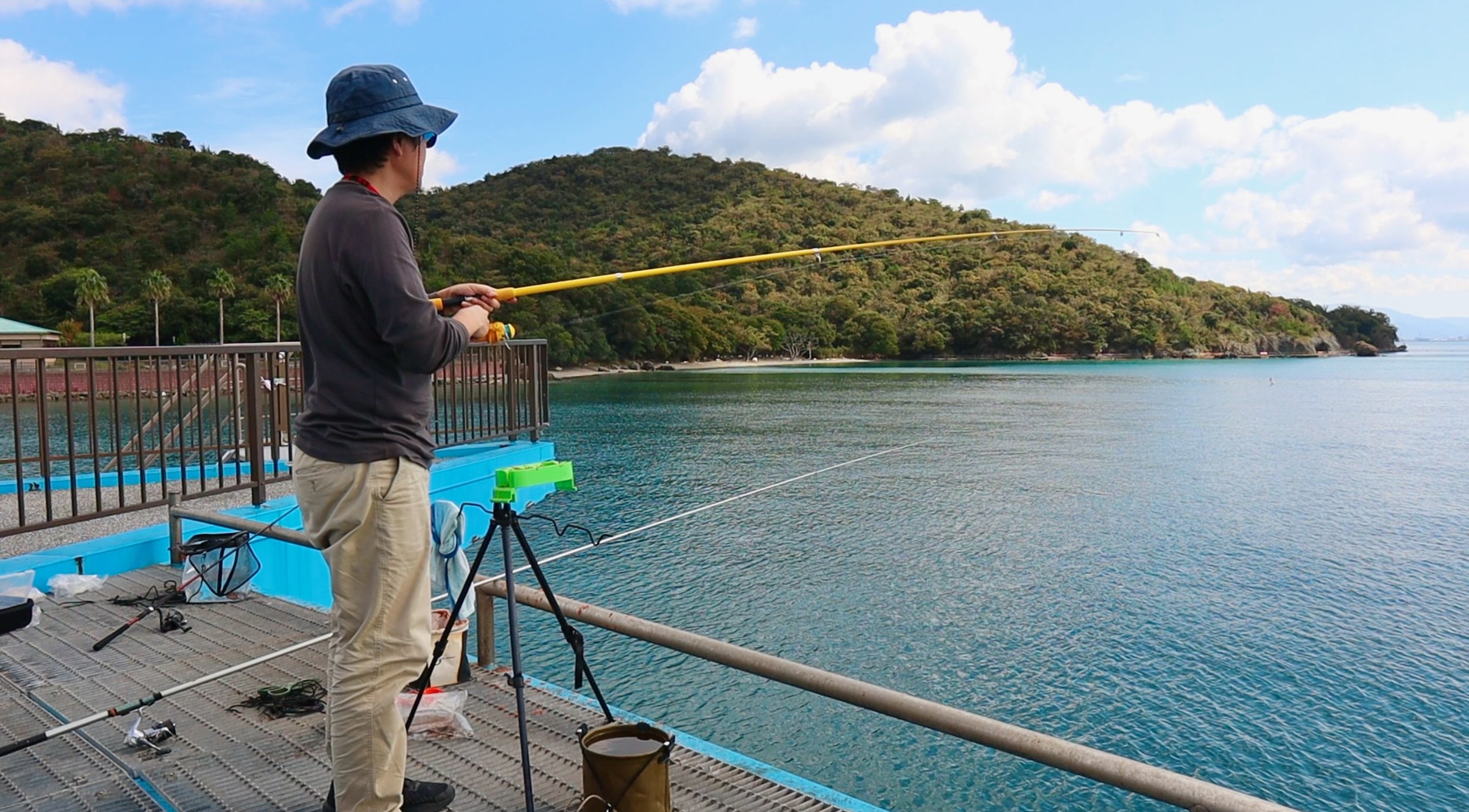
During the morning, while exploring here and there around the deck, I exchanged information with nearby anglers and went around asking what they were catching. Looking down into the sea below, it was full of signs of life, and I could see schools of fish darting right past our rig, tugging at the rod with quick pulls and playfully teasing us!
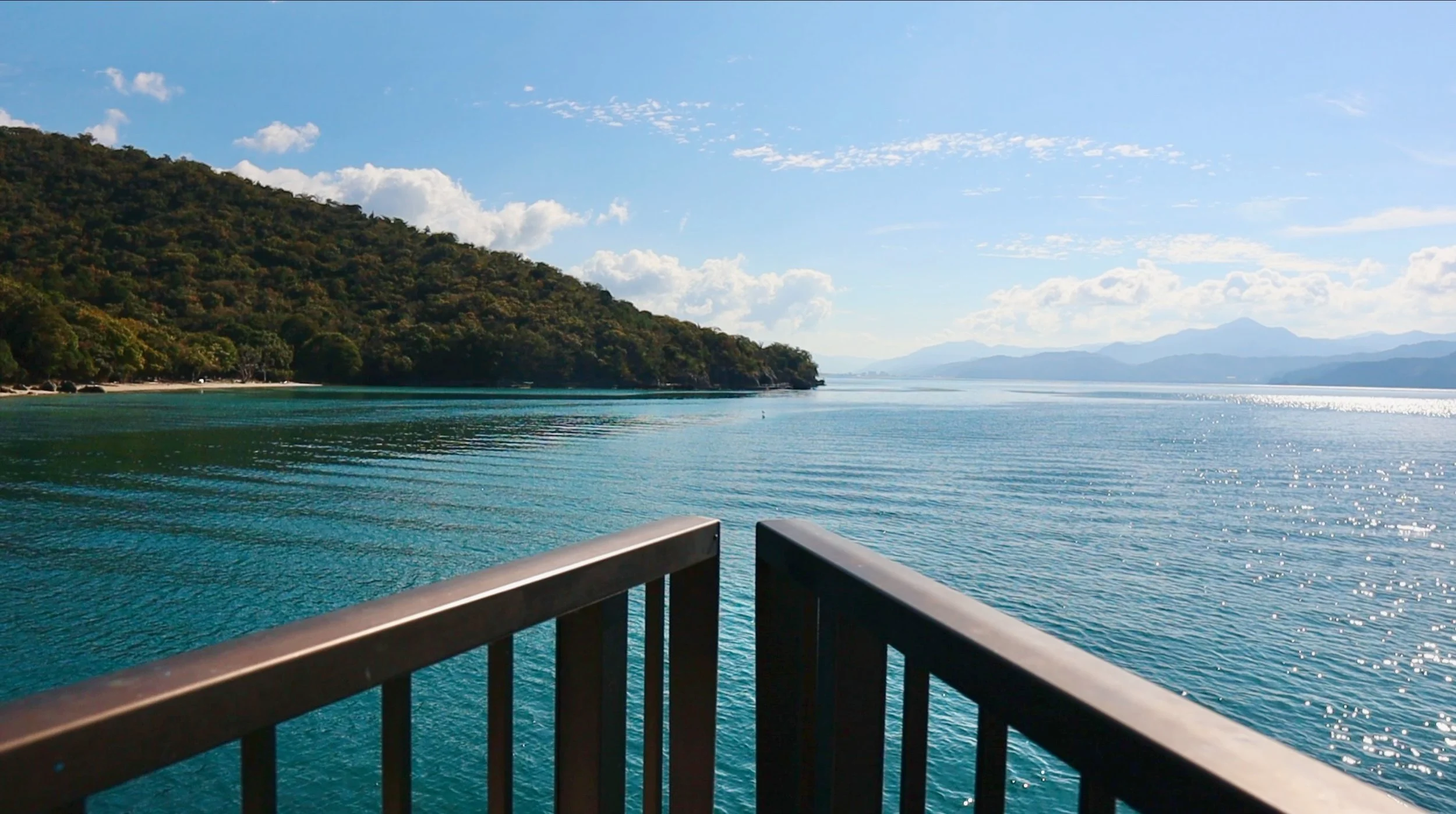
While waiting for a bite on the rod, I spent the time gazing quietly at the calm sea.
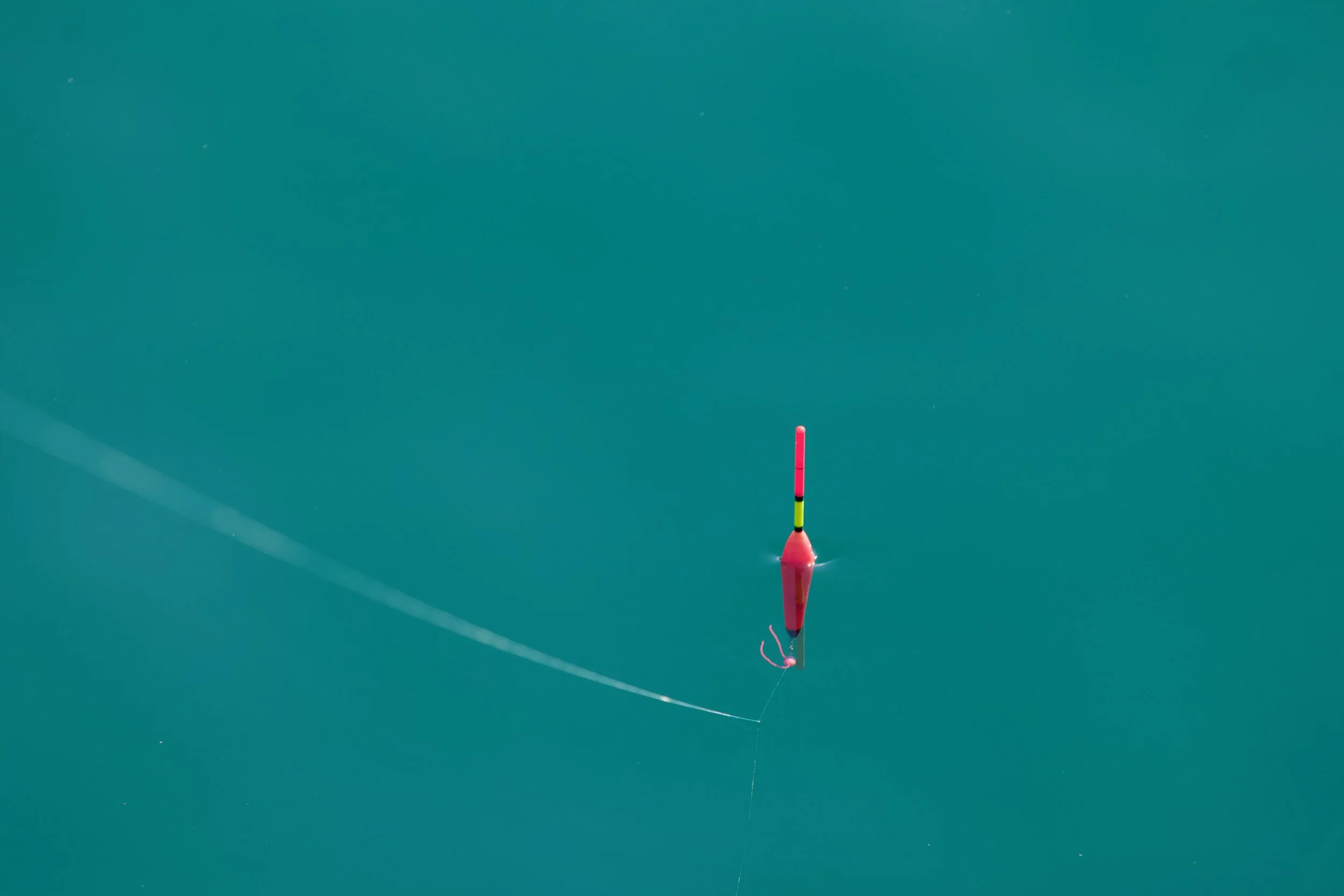
The Role of the Pink Float (Bobber): It keeps the rig at the ideal depth (tana) where schooling fish like horse mackerel swim, and visually alerts you the moment a fish bites the bait!
Final Thoughts
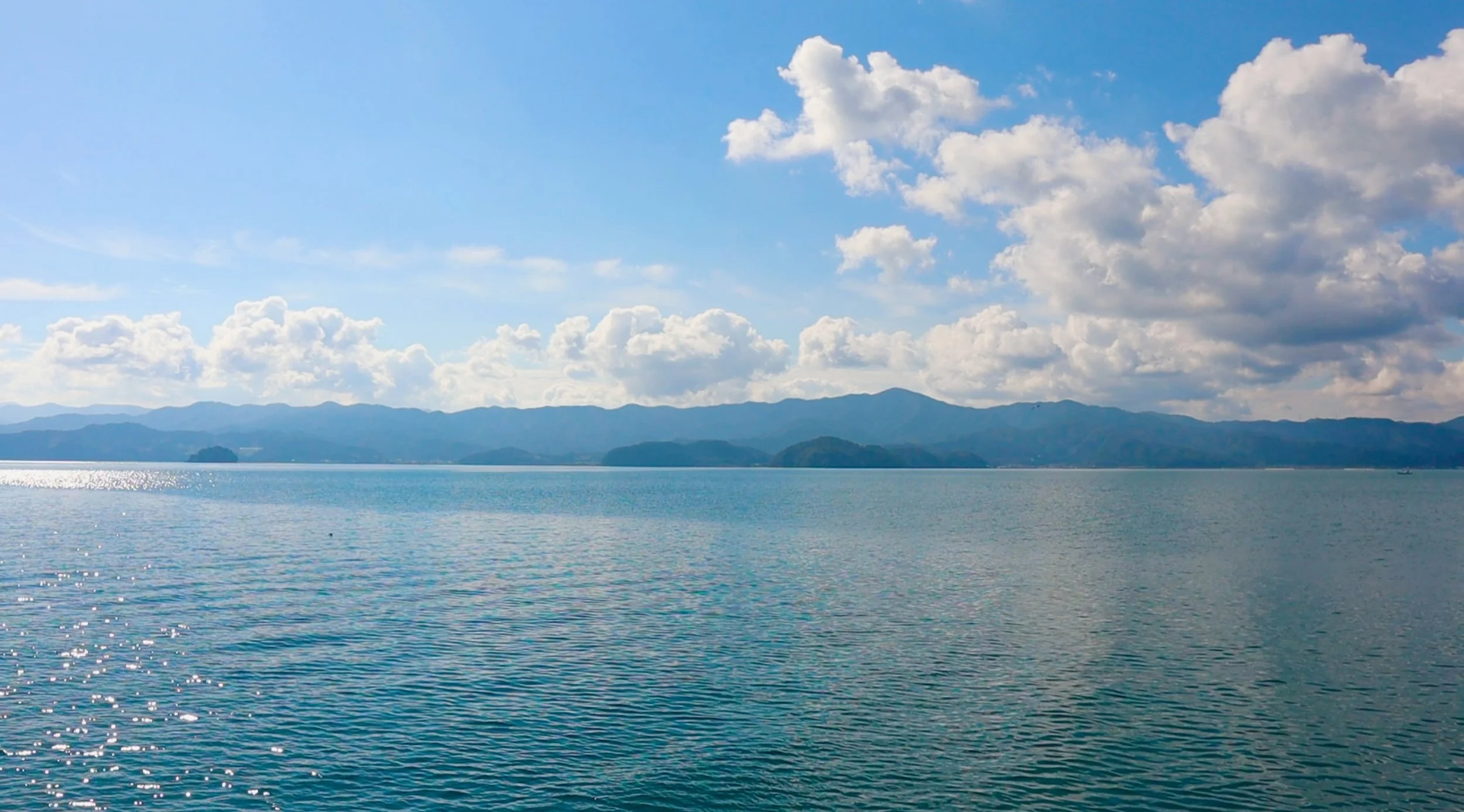
Even for those who don't fish often or are complete beginners, Akaguri Fishing Park is an excellent spot to start sea fishing. Even if you don't catch as much as you hoped, you can learn and improve by watching the techniques of surrounding anglers or asking for their advice. Spending time while gazing at the beautiful, serene coastal scenery of Wakasa Bay is more than worth the visit in itself.
So what’s catching?
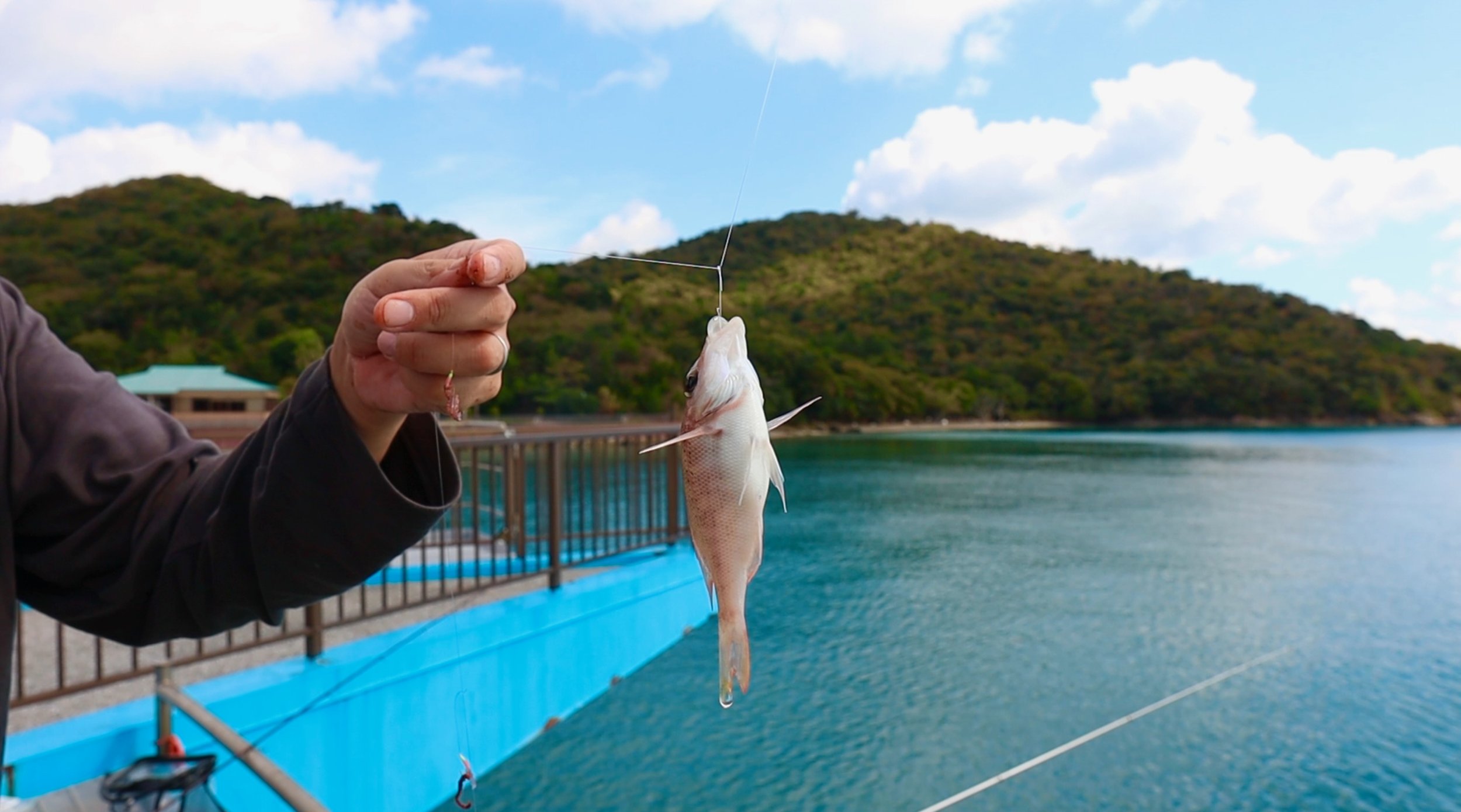
If you want to know what kind of fish are currently being caught, be sure to check the park's official blog. It is regularly updated with recent catch photos from visitors, making it a great reference for your trip!
While the fish you can catch in Wakasa Bay vary by season and year—and some seasons may overlap—here is a general guide to the main species you can target (※Note: Seasons are general guidelines).
[Seasonal] Target Fish, Rigs & Bait Guide
Autumn (September – November): The Peak Fishing Season of the Year
Target Fish: Reef squid (Aori-ika), horse mackerel (Aji), threadfin leatherjacket (Kawahagi), Japanese Spanish mackerel (Sagoshi), rockfish (Mebaru), and scorpionfish (Kasago / migratory blue-water species).
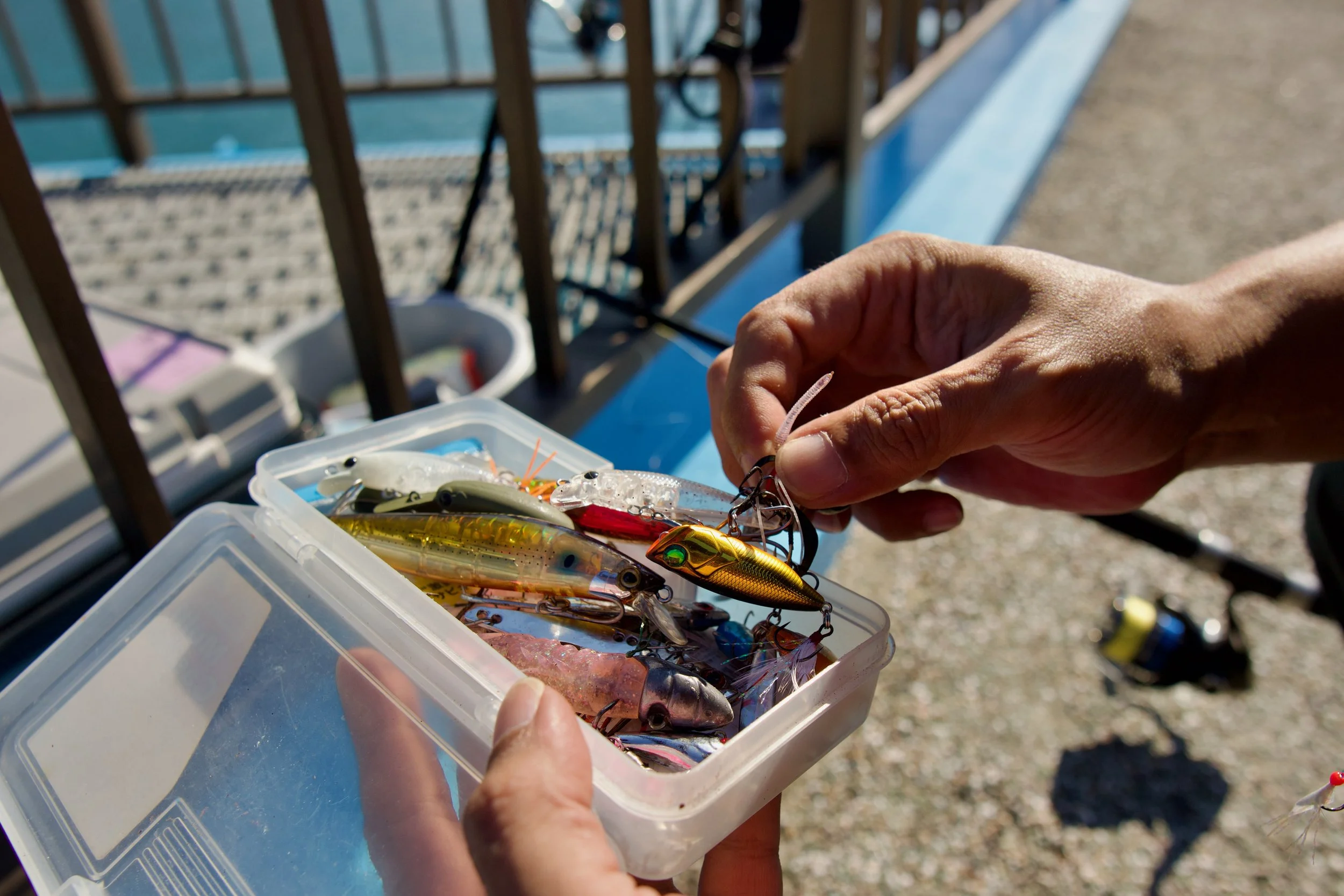
Technique & Bait: Eging—animating squid jigs (egi) around the pier to target reef squid—is very popular. You can also target threadfin leatherjacket using small hooks baited with ami-ebi shrimp or tiny krill (okiami), or enjoy "live-bait fishing" (yogawase-tsuri) using live horse mackerel to target larger fish.
Winter (December – February): Targeting Winter Bottom-dwellers Around the Pier
Target Fish: Fat greenling (Ainame), rockfish (Mebaru), and Japanese seabass (Suzuki).
Technique & Bait: In the clear winter sea, fish stay close to the pier base and structures. The key is to carefully and slowly explore near the sea floor using live sandworms (ao-isome) or krill (okiami).
Spring (March – May): Rockfish & Early-Season Horse Mackerel
Target Fish: Rockfish (Mebaru), scorpionfish (Kasago), and early-season horse mackerel (Hashiri-aji).
Technique & Bait: A period when water temperatures begin to rise. Target the base of the pier and rocky areas using float rigs or bottom-drop rigs (doutsuki) baited with krill (okiami) or live sandworms (ao-isome).
Summer (June – August): Easy High-Volume Season with Sabiki Fishing
Target Fish: Horse mackerel (Aji), chub mackerel (Saba), and Japanese sillago (Shirokisu).
Technique & Bait: The ideal season for families and beginners. Target schools of horse mackerel and chub mackerel using sabiki rigs with feeder baskets packed with ami-ebi shrimp. You can also target Japanese sillago on the sandy bottoms by light bottom casting (choi-nage) baited with sandworms (ao-isome / ishi-gokai).
Practical Tips for Visitors
Best Times to Fish: Always check the weather before planning a trip. Aim for early morning or late afternoon when fish feeding activity peaks around tidal shifts.
Sun Protection: The open pier receives direct sunlight throughout the day. While a roofed gazebo sits in the center section, bring polarized sunglasses, sunscreen, and a wide-brimmed hat on sunny days.
Footwear & Gear: Wear comfortable, non-slip rubber-soled shoes for wet deck surfaces. Pack a hard cooler with ice to keep your catch fresh for the trip home.
Chairs: While many people stand while fishing, it is always good to have somewhere to sit down. As the park doesn’t have any dedicated seating on the edge of the pier, it is a good idea to bring a small foldable camping chair.
Clean-Up: Bring wet hand wipes or sanitizer to quickly clean off fish scales and bait scent before heading into town for lunch.
Life Jacket Recommendation: The fishing pier stands several meters above the sea surface, so wearing a life jacket is strongly recommended for young children.
Visitor Information: Akaguri Fishing Park
Operating Period: March 1st – 4th Sunday of December (※Subject to change depending on weather and sea conditions)
Operating Hours:
April – November: 6:00 AM – 6:00 PM
December & March: 7:00 AM – 5:00 PM
Fishing Pier Admission Fee:
Adults (Junior High School & older): ¥1,000 / day
Children (Elementary School): ¥500 / day
Preschoolers: Free
Parking / Cleaning Contribution Fee: ¥1,000 / day per passenger car
BBQ Facility Fee: ¥3,000 per table (up to 6 people) (※Advance reservation required)
Contact Information:
During Operating Season (April – November): Akaguri Fishing Park TEL: 0770-77-4003
Off-Season / Winter Period (December – March): Oshima Fishery Cooperative TEL: 0770-77-0162
Official Website: Ohi Town Tourism Association Facility Page
Address: 21-110 Oshima, Ohi Town, Oi District, Fukui Prefecture
Fukui Local Revitalization Cooperator
Tsuruga & Wakasa Area Tourism & Culture Writer: Bryan Keith Eastlake
I also share daily updates on Instagram—check out my page here!